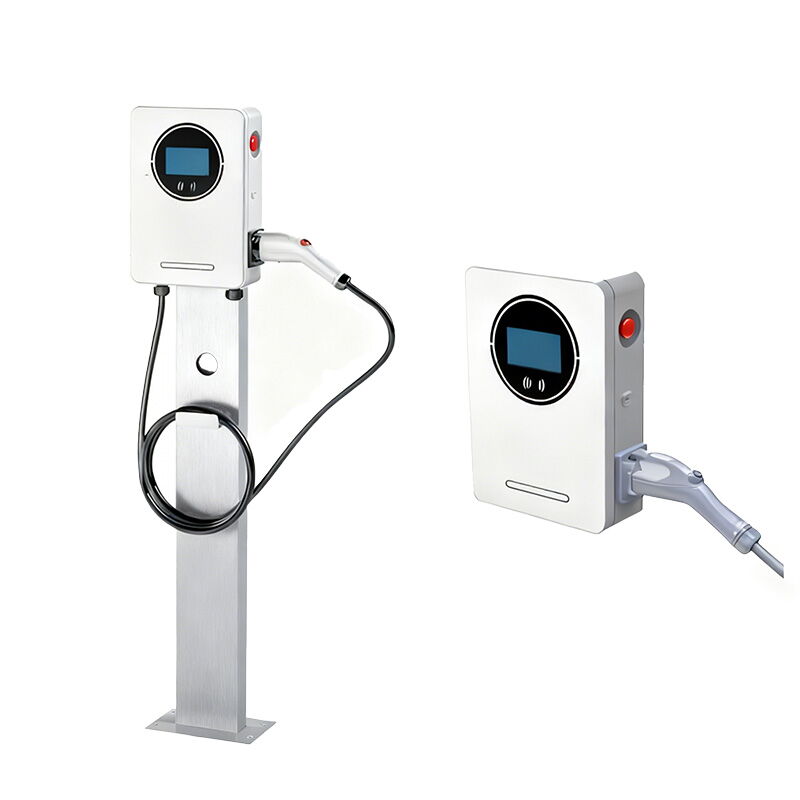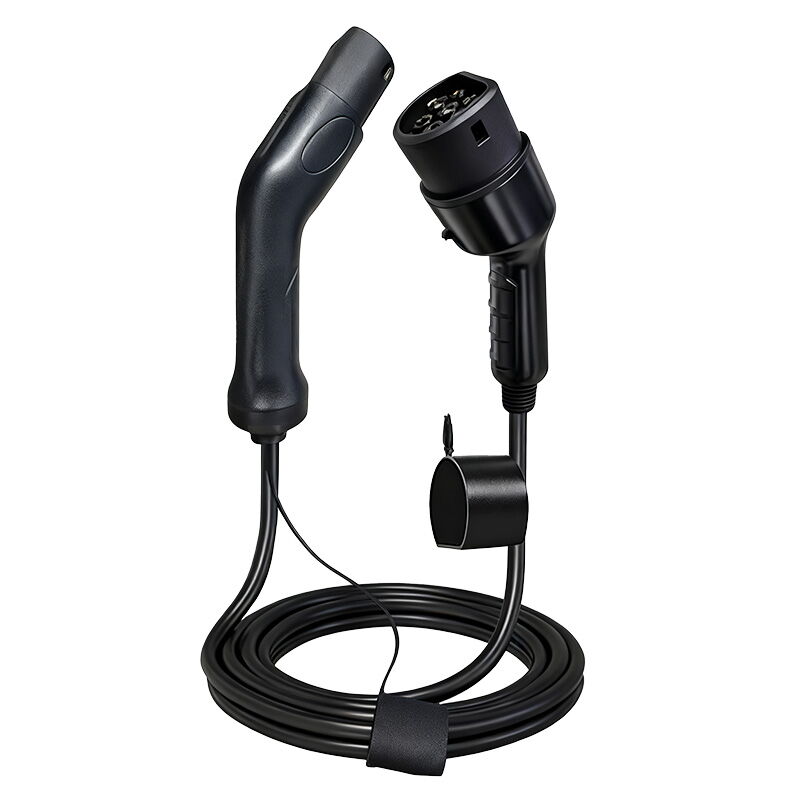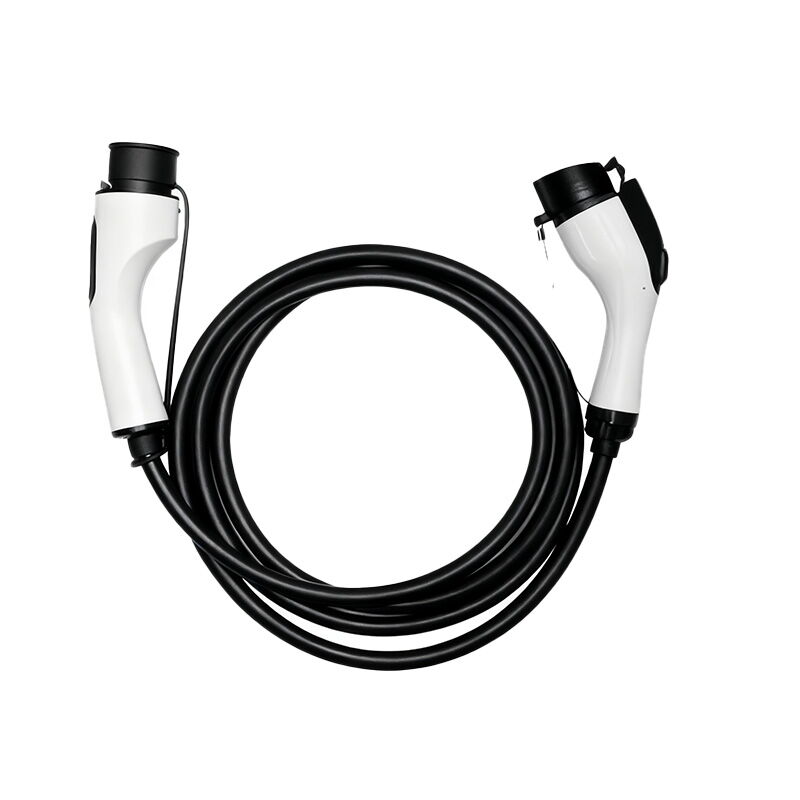
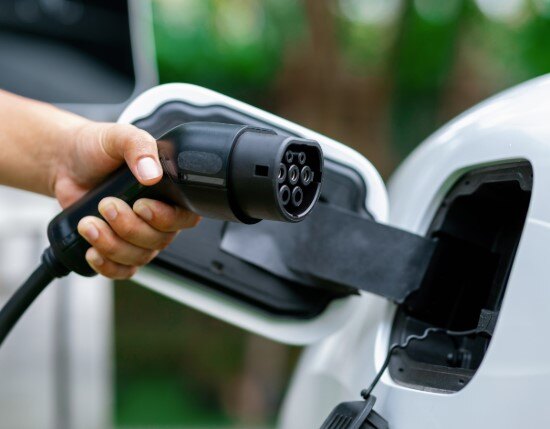
As electric vehicles (EVs) rapidly gain popularity around the world, charging has become a practical concern for both current owners and potential buyers. Unlike fuel vehicles, which share a largely standardized refueling interface, EVs feature a variety of ev charging connectors. These differ in shape, pin configuration, and supported power levels depending on the region, brand, and model. Common examples include North America's SAE J1772, Tesla's proprietary NACS, the fast-charging CCS standard, Europe's Type 2, Japan's CHAdeMO, and China's GB/T standard. Each connector serves specific vehicles and charging scenarios.
Charging speed further complicates the landscape, with three main levels: Level 1, Level 2, and Level 3. Daily commuters, home users, and long-distance travelers all have distinct requirements for charging devices and connectors. Choosing an incompatible connector or misunderstanding your vehicle's charging capabilities can lead to problems, such as difficulty finding a compatible station or experiencing slower-than-expected charging.
This guide provides a structured overview of EV charging connectors, covering seven major types: Type 1, Type 2, CCS1, CCS2, CHAdeMO, GB/T, and NACS. It compares alternating current (AC) and direct current (DC) fast charging and offers practical advice for choosing the right connector based on vehicle type, usage scenarios, and travel needs. Whether you already own an EV or are considering one, this guide will help you make informed decisions for smooth, efficient ev charging.
Before comparing different connector types, it is essential to understand three core concepts: the importance of connectors, the fundamentals of EV charging, and the classification of charging levels. Mastering these concepts lays the foundation for comprehending the differences among various connector standards.
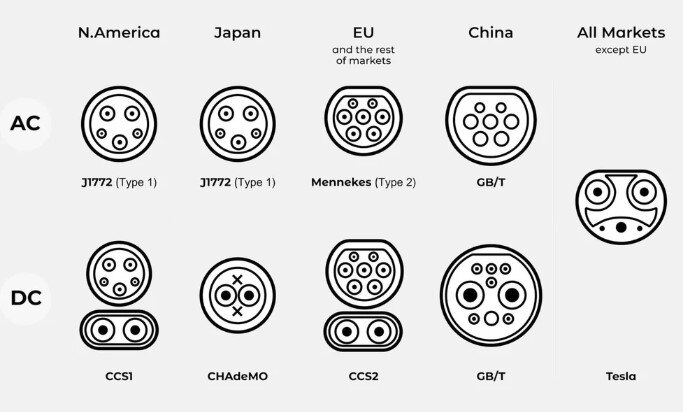
EV charging connectors form the critical interface between vehicles and charging infrastructure. They directly affect charging efficiency, safety, and convenience. As the global EV market grows, connector types and standards continue to evolve. Understanding connector types, characteristics, and appropriate applications is key to ensuring a smooth charging experience.
Connectors are not merely physical plugs—they involve matching voltage, current, and communication protocols. Regional and brand-specific variations in charging standards make choosing the right connector a crucial part of EV ownership.
EV charging is typically categorized into three levels based on power and speed:
With the fundamentals of charging levels and AC/DC charging understood, we can now explore the seven most common connector types worldwide, each suited for specific regions, vehicles, and charging scenarios.
The Type 1 connector, also known as SAE J1772, is standard for Level 1 and Level 2 charging in North America. Featuring five pins, it supports up to 80 amps at 240V AC, with a maximum power of 19.2 kW.
This connector is standard across the U.S. and Canada for most brands except Tesla. Chevrolet, Ford, Nissan, and other major manufacturers widely support Type 1. It is commonly used for home charging and public Level 2 stations, making it one of the most accessible connectors in North America. Tesla vehicles can charge at J1772 stations using an adapter, offering additional flexibility. The advantages of Type 1 include broad adoption, high compatibility, and ease of use.
The Type 2 connector, or Mennekes, is Europe's standard interface. It has seven pins and supports up to 32 amps on 400V three-phase AC, delivering a maximum of 22 kW.
Type 2 supports both single-phase and three-phase AC charging and is widely adopted across Europe's public charging network. Its automatic locking mechanism prevents accidental disconnection during charging, improving safety. For European users, Type 2 is as ubiquitous as Type 1 is in North America, with BMW, Volkswagen, Audi, and other brands standardizing its use.
CCS1 is the primary DC fast-charging standard in North America, built on the J1772 AC connector with additional DC pins for fast charging. It supports up to approximately 350 kW, handling high voltage and high current needs.
The main advantage is its dual compatibility with AC and DC charging, allowing manufacturers to standardize vehicle charging ports. Most new North American models from GM, BMW, and Ford adopt CCS1, which is now central to the region's fast-charging network, making it ideal for long-distance travel.
CCS2 is Europe's main DC fast-charging standard, extending the Type 2 connector. It supports similar high-power output (up to 350 kW) and is widely used by BMW, Volkswagen, and Audi, as well as some Tesla models in Europe.
Like CCS1, CCS2 integrates AC and DC charging into a single connector, simplifying vehicle charging systems and improving user convenience. It is central to Europe's public fast-charging network.
CHAdeMO, developed in Japan, is one of the earliest DC fast-charging standards. Early versions supported 62.5 kW, with later iterations reaching 400 kW or more.
CHAdeMO features a unique design supporting multiple charging modes, mainly used in Japanese models such as the Nissan Leaf. While fast, CHAdeMO is gradually being replaced by CCS in North America and Europe. Nevertheless, for owners of older Japanese EVs, understanding CHAdeMO remains important.
China's GB/T standard includes separate AC and DC interfaces, with AC charging up to 7.4 kW and DC up to 237.5 kW.
China is developing the next-generation ChaoJi standard, potentially supporting 500–900 kW ultra-fast charging. GB/T is the dominant standard in China and may influence future international charging standards. Chinese EV owners primarily rely on GB/T for daily charging.
Developed by Tesla, NACS (formerly Tesla's proprietary connector) supports both AC and DC charging with a maximum output of approximately 250 kW.
Initially exclusive to Tesla, NACS is opening to other manufacturers, and Tesla's Supercharger network will support multiple brands by 2025. Its major advantage is the extensive coverage of Tesla's Supercharger network, offering fast, convenient charging for Tesla users. NACS may become a significant component of North America's mainstream charging ecosystem.
After understanding connector types, many users wonder about the practical differences between AC charging and DC fast charging. This section compares them in terms of speed, equipment requirements, usage scenarios, and battery impact.
In AC charging, the vehicle's onboard charger converts AC to DC. Level 1 (120V) and Level 2 (240V) are the main options, with slower charging speeds:
Level 1 adds 3–5 miles per hour, suitable for overnight home charging, requiring no special equipment.
Level 2 adds 20–40 miles per hour and is ideal for daily home use, requiring a dedicated charger. Most North American vehicles use J1772 for Level 2, while Tesla requires an adapter.
AC charging is cost-effective, gentle on batteries, and suitable for routine use, making it the primary method for most non-Tesla EVs.
DC fast charging converts AC to DC at the station (Level 3), offering rapid charging—typically 15–30 minutes to reach 80% battery capacity. DC fast charging is ideal for highways or long trips, with common connector types including CCS1, CHAdeMO, and Tesla NACS.
Frequent use of DC fast charging may accelerate battery degradation, so it is generally not recommended for daily charging. DC chargers can add 75–525 miles in 30 minutes depending on the connector and power rating, making them essential for long-distance travel.
Selecting the appropriate connector depends on three factors: vehicle type, charging environment, and travel habits.
Start by identifying your vehicle's supported connector type via the manual or manufacturer. Battery capacity varies widely:
Plug-in hybrid EVs (PHEVs) typically have 5–20 kWh batteries, requiring slower charging.
Battery electric vehicles (BEVs) have 60–100 kWh batteries, benefiting from higher-speed charging.
Tesla owners use NACS as standard but can adapt to J1772. North American non-Tesla users typically use J1772 and CCS1, while Europeans rely on Type 2 and CCS2.
The charging environment influences connector choice:
Home charging generally uses Level 1 or Level 2. Level 1 (NEMA 5-15, 15A, 125V) is slow but low-cost. Level 2 requires a 240V outlet, adding 20–65 miles per hour.
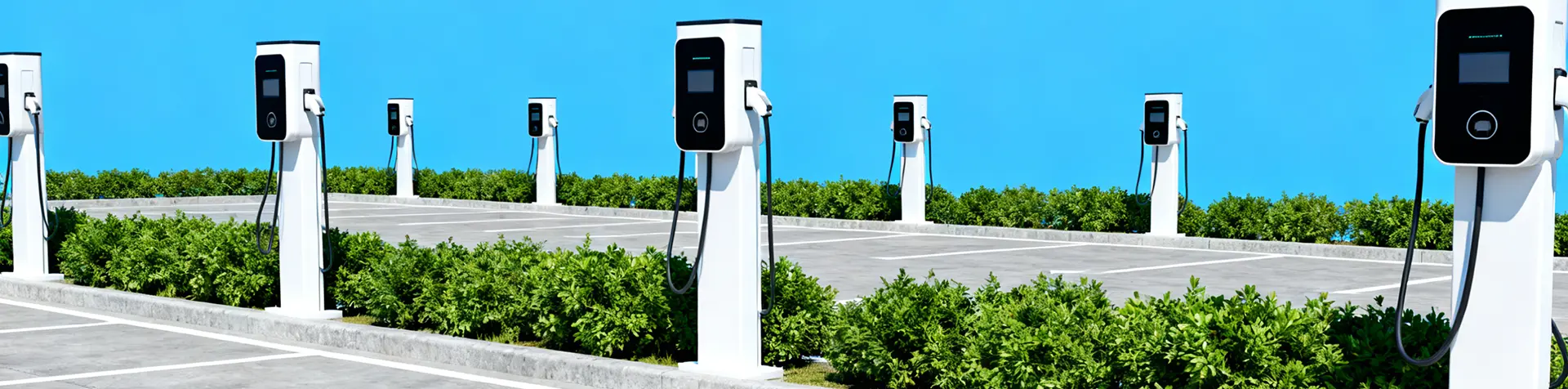
Public stations provide Level 2 and DC fast charging. City users mainly rely on Level 2, while travelers use CCS or NACS fast-charging stations.
Frequent cross-region travel requires multi-standard compatibility and adapters. North America uses J1772, CCS1, and NACS; Europe uses Type 2 and CCS2; Japan and China have separate standards. Planning ahead ensures smooth travel.
Modern EV connectors feature built-in safety mechanisms such as ground fault detection, overload protection, and temperature monitoring. Using the correct plug type and compatible station saves time and prevents problems.
Beyond selection, safety and maintenance are vital for connector longevity and safe operation. EV connectors endure repeated use, high currents, and environmental challenges.
Modern connectors include multiple safety mechanisms: ground fault circuit interrupters cut power during leakage, overload protection prevents current damage, and temperature monitoring prevents overheating. Using certified equipment ensures safe, efficient charging.
Adapters bridge different standards. Tesla users can charge at J1772 stations with an adapter. Adapters must meet safety standards and be compatible with the vehicle and station.
Routine care involves keeping connectors clean, inspecting cables, and avoiding charging in harsh weather. Regular checks and timely repair or replacement extend equipment life. Travelers should carry adapters and know nearby station types for contingency planning.
EV charging connectors are a vital component of the EV ecosystem. From Type 1 to NACS, Level 1 to Level 3, various standards and levels meet diverse charging needs. Understanding your vehicle's supported connectors and choosing the right charging method ensures smooth operation. Home charging is best via Level 2, long trips rely on DC fast charging, and cross-region travel requires adapters.
As technology advances and standards unify, charging will become faster, smarter, and more standardized, supporting broader EV adoption. Whether you are considering an EV or already own one, mastering charging connectors is essential for a safe, efficient, and convenient driving experience.