Ultra-Fast Charging for EVs: Challenges & Trends
As the ownership of new energy vehicles (NEVs) continues to rise, charging efficiency has gradually become a core factor influencing user experience and the overall development of the industry. The limitations of traditional charging methods in terms of time cost are becoming increasingly apparent and are no longer able to meet the needs of high-frequency travel and commercial operations. Against this backdrop, ultra-fast charging technology has emerged. With the goal of higher power and shorter charging times, it is reshaping the energy replenishment system for new energy vehicles. As a systematic engineering solution that relies heavily on power electronics, magnetic components, battery technology, and grid coordination, ultra-fast ev charging is not merely a simple increase in charging speed, but represents a comprehensive leap in technological capabilities across the entire industry chain.
Ultra-fast charging is currently mainly distinguished by charging power and charging time. Generally speaking, charging power needs to exceed 500 kW to be considered ultra-fast charging. Although there are already national standards related to charging piles, ultra-fast charging is still in a non-standardized state, and its official standards have not yet been released and are still under formulation. This means that during the development of ultra-fast charging, there is a lack of unified specifications, and differences exist among enterprises in research, development, and production. This situation not only provides room for technological innovation, but also brings certain challenges to market standardization and regulation.
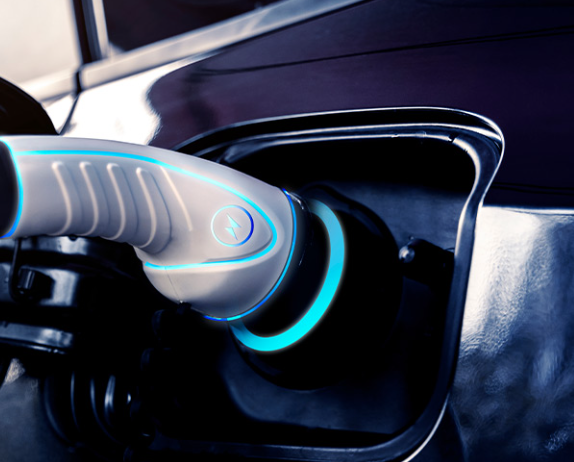
Importance of High-Frequency Magnetic Materials and Components: Shorter charging times and higher charging power require higher-frequency magnetic materials and magnetic components. The realization of ultra-fast charging depends on upstream manufacturers developing more high-frequency magnetic materials and components, as well as improving manufacturing processes to meet increasingly complex technical requirements. For example, when ultra-fast charging reaches 480 kW, low-power magnetic components can no longer meet the demand. Magnetic components originally used in conventional charging piles need to be reselected, and higher-frequency products must be introduced.
Withstand Voltage and Modular Characteristics: Compared with ordinary charging piles, ultra-fast charging systems may operate at voltages as high as 1000 V. This places higher withstand-voltage requirements on relays, fuses, and magnetic components. At the same time, due to the increase in power, multiple modules often need to be stacked to meet the requirements, which also increases the number of magnetic components. To meet the needs of ultra-fast charging, magnetic components should feature high power capability and modular design. The power of a single module must continue to break through upward to satisfy the high-power demands of ultra-fast charging. In addition, in order to minimize overall size, magnetic components also need to develop in a more modular direction.
Selection of High-Frequency Magnetic Materials and Loss Issues: Ultra-fast charging with high current and high power naturally requires higher-frequency magnetic components, and high-frequency magnetic materials such as PC95 and PC96 are generally selected. Although current magnetic components can basically meet high-frequency requirements, frequencies exceeding 500 kHz will cause significant losses in magnetic components. Therefore, it is still necessary to develop and produce more low-loss high-frequency magnetic materials and magnetic components to cope with the technical challenges brought by ultra-fast charging.
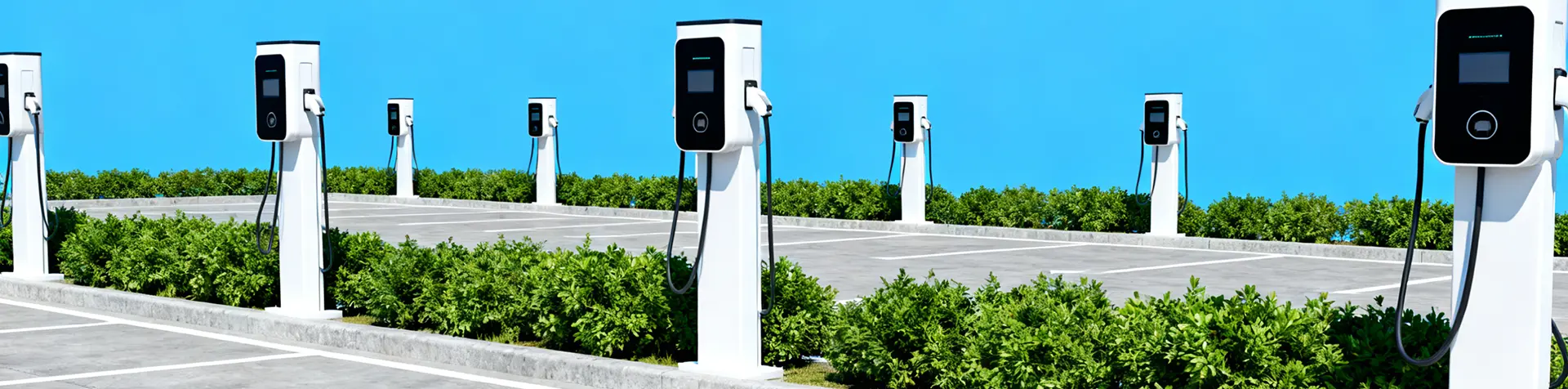
Size and Application Scenarios: Ultra-fast charging stations are generally relatively large in size. However, since they are mostly built outdoors and are not intended for single-person or single-household use, their size does not significantly affect their promotion and application. Ultra-fast charging is not well suited for personal use scenarios and, unlike mobile phone fast charging, does not need to consider portability, so there is no strong requirement for miniaturization. Consumers’ primary demand for ultra-fast charging is charging speed, so design efforts focus more on increasing charging power. Although miniaturization is a development trend in the magnetic components industry and ultra-fast charging stations may move in this direction in the future, size is not the main concern in the short term. At present, the focus remains on improving conversion efficiency.
Performance Improvement Directions: Ultra-fast charging requires high-power, high-permeability, high-frequency magnetic materials. However, the power density of a single magnetic component may not meet the high-power requirements of ultra-fast charging, resulting in relatively large overall system size. Therefore, electronic components are also moving toward integration to reduce costs. Magnetic components occupy a large proportion of the volume in the entire charging station module, and their performance directly affects the characteristics of the entire conversion module. The performance of charging modules also depends on semiconductors and magnetic components. It is expected that magnetic components can achieve low loss, high efficiency, and small size, thereby promoting the development of charging modules with high efficiency and compact dimensions.
Directions for Battery Technology Breakthroughs: Batteries are one of the key components of ultra-fast charging systems. At present, the main directions for battery technology breakthroughs include changing electrolyte formulations, modifying cell structures, reducing temperature rise, and increasing voltage. The core of ultra-fast charging lies in the AC–DC charging conversion module. As long as the output voltage of the charging module can be maximized in terms of high voltage and high current while ensuring safety and reliability, charging speed will naturally increase. This is closely related to battery performance. If batteries can withstand higher currents, charging stations can be designed to match accordingly. At this stage, battery technology is gradually developing in this direction.
Measures to Address Battery Safety Issues: Battery safety is the primary concern for industry participants in ultra-fast charging. Measures to address battery safety mainly include the following: first, selecting safer materials, such as using lithium iron phosphate batteries as much as possible and reducing the use of high energy density materials; second, designing batteries to be flatter and thinner to achieve better heat conduction; third, increasing the number of tabs to facilitate heat dissipation. In addition, some power supply manufacturers are striving to increase the allowable operating ambient temperature of power supplies, accelerate heat dissipation, and reduce the risk of accidents. Battery manufacturers can also reduce heat generation and enhance heat dissipation by adjusting electrolyte formulations to lower internal resistance, selecting low energy density materials, and modifying battery structures, thereby improving battery safety.
Application Scenarios: Ultra-fast charging is generally used in scenarios where urgent charging is required, allowing sufficient driving range to be replenished in a short time. For operational logistics vehicles, battery swapping is often more convenient. Currently, a driving range of 300–400 kilometers for new energy vehicles can already meet basic consumer needs. The key issues are charging convenience and battery longevity and safety. From the perspective of convenience, both ultra-fast charging and battery swapping can achieve this, but ultra-fast charging has greater market scalability and development potential.
Advantages and Development Trends: Ultra-fast charging allows consumers to independently choose how much energy to charge, while battery swapping is more attractive to consumers who need a fully charged battery in a very short time. However, battery swapping also has certain problems. For example, once a safety issue occurs, it is difficult to determine whether the problem lies with the battery or the vehicle’s power conversion system, which is not conducive to reasonable accountability for consumers. Moreover, battery swapping requires a large number of spare batteries, resulting in significant storage space and cost requirements. In comparison, ultra-fast charging has broader application scenarios. Its development is similar to the evolution of mobile phone charging methods, from replacing batteries in the past to direct charging today, making ultra-fast charging a more promising solution.
Industry Chain Coordination Issues: The development of ultra-fast charging cannot be achieved solely by battery or charging pile companies; it requires coordinated efforts across the entire upstream and downstream industry chain. From the perspective of charging piles, high voltage places higher demands on safety factors. From the grid perspective, large instantaneous power can also have a significant impact. In addition, the existence of other range-extension methods such as battery swapping means that ultra-fast charging is not a necessity for consumers, which poses certain challenges to market expansion in the coming years.
Lag in Standards and Regulations: At present, there is no formal definition standard for ultra-fast charging, which leads to a lack of unified specifications in enterprise R&D and production processes and can easily result in market disorder. At the same time, lagging standards also pose difficulties for regulatory authorities and are not conducive to healthy market development. As ultra-fast charging technology continues to evolve, the formulation of relevant standards and regulations needs to accelerate to keep pace with market changes.
Market Acceptance and Demand Issues: Emergency rapid charging scenarios are not common or primary needs for most consumers, and the application of ultra-fast charging still belongs to a niche market. Although ultra-fast charging has many advantages, consumer acceptance of new technologies and actual demand still need time to be validated. In addition, the relatively high cost of ultra-fast charging equipment may also affect the speed of market promotion.
Despite the many challenges facing ultra-fast charging, its development prospects remain broad as technology continues to advance and the market gradually matures. At present, many new magnetic materials and magnetic components are in the R&D and testing stage. Once subsequent solutions mature and are effectively validated, they will gradually be introduced to the market. Manufacturers of magnetic components and power supplies need to start from materials, developing higher-performance high-frequency magnetic materials and improving manufacturing processes to meet complex technical requirements. At the same time, the continuous improvement of power batteries and charging infrastructure has also laid a solid foundation for the future development of ultra-fast charging. As long as all parties in the industry chain work together and continuously overcome technical challenges, ultra-fast charging is expected to become one of the mainstream charging methods for new energy vehicles, providing consumers with a more convenient and efficient charging experience.
In conclusion, as an important technology in the field of new energy vehicle charging, ultra-fast charging is of great significance. Although there are still some issues and challenges at present, with continuous technological progress and increasing market recognition, ultra-fast charging is expected to be more widely applied in the future and provide strong support for the development of new energy vehicles.