User-oriented Design in Electric Vehicle Charging Stations
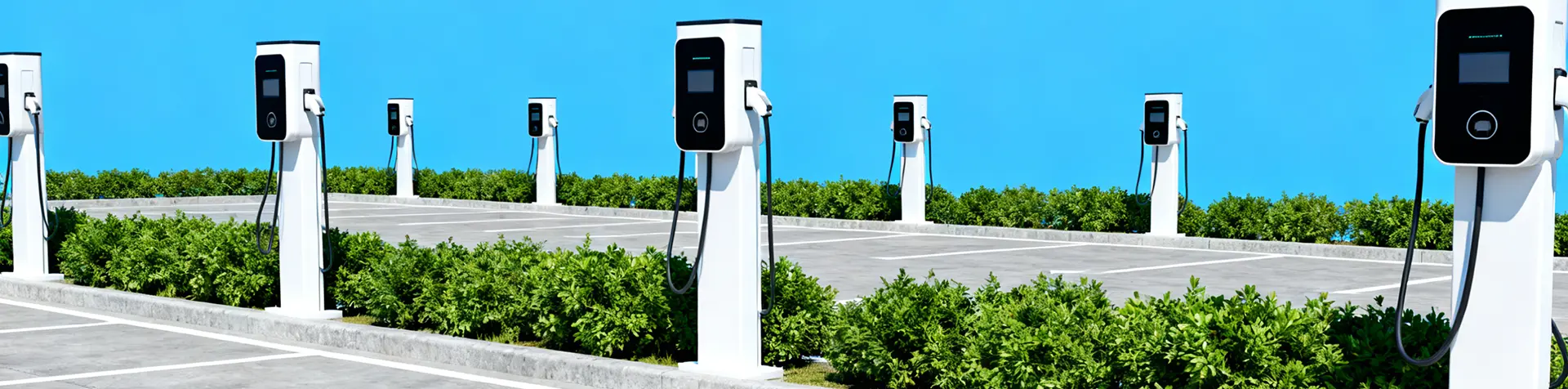
In today's society, with growing environmental awareness and continuous technological advancement, electric vehicles (EVs) are gradually becoming a popular choice for transportation. However, the widespread adoption of EVs cannot occur without a critical infrastructure, ev charging stations. From home garages to commercial and public areas, charging stations are ubiquitous, yet user satisfaction with the charging experience is declining. The reasons behind this deserve in-depth exploration, and the interaction design and related technological applications of ev charging stations are undoubtedly key to improving this situation.
Currently, globally, charging stations are mainly divided into Level 1 and Level 2 chargers for home use, and Level 2 and Level 3 chargers for commercial and public areas. These chargers differ in charging current to meet different user needs. However, users face many inconveniences during use.
First, most charging station service providers require users to access the station via dedicated mobile applications. This means users may need to install multiple applications on their phones, which is undoubtedly a burden for ordinary users. In addition, some users may be unable to use the applications smoothly due to poor mobile signals, especially in remote areas, which affects the charging experience.
As an alternative, users can also access the charging station via RFID membership cards. However, reports indicate that if the charging station is equipped with a touchscreen display, users prefer to operate directly via the screen rather than download applications. Ordinary users on average need to carry five RFID cards or install up to ten applications on their phones; this complexity undoubtedly increases user costs.
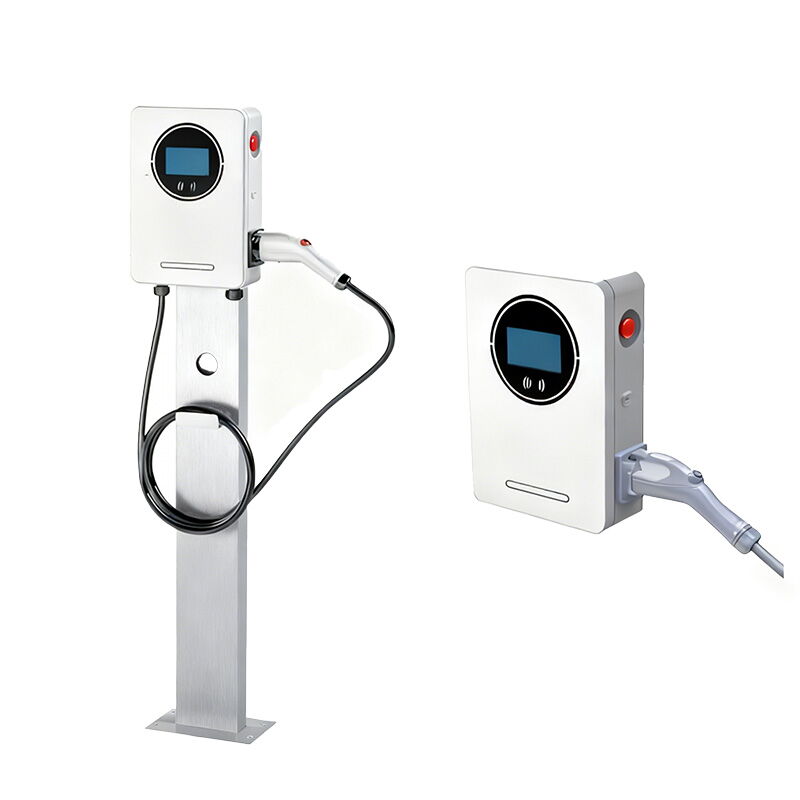
The emergence of touchscreen displays provides an effective way to solve the above problems. With a touchscreen display, users can operate directly on the charging station without relying on a mobile application or RFID card. This direct interaction not only improves user convenience but also provides greater confidence in areas with poor mobile signals, making the charging process start faster.
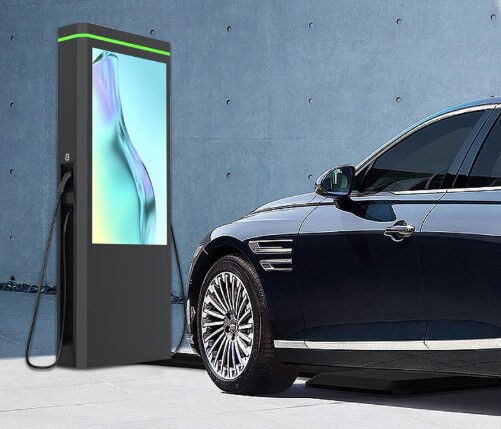
Touchscreen displays provide users with an intuitive interface, allowing them to select charging options and start or stop charging with simple touch operations. This intuitive interaction is especially helpful for beginners and elderly users. For example, charging station service providers can play operation videos on the HMI display to guide users in selecting the correct cable or adapter and follow the correct steps. In case of charging failure or faults, the HMI display can report specific reasons to users, such as loose or incorrectly connected cables, charging step errors, insufficient account balance, or internal faults of the charging station, helping users quickly resolve problems.
HMI displays also allow users to make payments through familiar touchscreen interfaces, using credit cards or barcodes. After charging is complete, the system prompts the user to press the “Stop Charging” button and click “Initiate Payment.” For credit card payments, users can also enter their PIN on the screen to complete the transaction. This flexible payment method not only improves convenience but also enhances security.
Through HMI displays, charging network operators can show usage prices according to different scenarios, such as visitors, members, or premium members. Many countries require companies to transparently display specific charges to users on their charging networks. This transparency helps users understand costs before use, avoiding dissatisfaction due to pricing issues.
Users from different language backgrounds can select their preferred language through the touchscreen display, allowing the same charging station to serve multiple users. This also enables charging station operators to cover a broader user base. In today's globalized world, multilingual support is undoubtedly an important advantage, helping operators attract more international users.
Charging status and various vehicle data can be displayed on the screen. The charging station can guide users to start or stop charging and inform them about the battery and vehicle health. In addition, the charging station can display advertisements on the screen, generating additional revenue for operators. This advertising not only increases operator income but also provides more information and entertainment for users.
Although touchscreen displays provide many conveniences, ensuring they function properly under various environments requires meeting a series of technical requirements.
Display types vary greatly in EV charging stations; some stations have no display, while others are equipped with small or large touchscreen displays. Display inconsistency may negatively affect user experience. Some newer charging stations are equipped with larger displays, providing clear charging information and advertising space, similar to advertising commonly seen at gas stations.
Since most EV charging stations are installed outdoors, displays must operate normally under extreme weather conditions, including strong winds, sandstorms, rain, and snow. In addition to withstanding harsh environments, displays must be sensitive enough to recognize user input. For example, touchscreens need to accurately detect input in low temperatures, humidity, or when users are wearing gloves.
Thin-film transistor (TFT LCD) technology is widely used in many EV charging station displays. When selecting displays for charging stations, engineers should prioritize enclosures certified by UL-F1 and displays designed for outdoor use according to UL 746C standards. Products meeting UL 746C standards have undergone UV exposure tests, including 720-hour testing with a double-sealed carbon arc weatherometer or 1000-hour testing with a xenon arc weatherometer. Products must also pass water immersion testing, immersing the tested equipment in 70°C water for seven days.
Display readability is also an important factor, as it may be difficult to read in bright sunlight. Therefore, displays should have sufficient brightness to ensure clear visibility under all lighting conditions.
Displays also need to consider IP and IK ratings. The IP rating indicates the device's resistance to water and dust, while the IK rating reflects impact resistance. The levels directly affect the durability and reliability of displays in outdoor environments.
The human-machine interface (HMI) of an EV charging station is not merely a hardware panel but a key interactive layer between users and the charging system. An intuitive and robust HMI helps users complete charging operations quickly, confidently, and accurately. The following are key design considerations.
Public EV charging stations must be highly durable. For example, reinforced Gorilla Glass can effectively resist strong impacts and reduce maintenance frequency. The front panel is reinforced and equipped with secure mounting points, so even under external force, internal damage is prevented, ensuring long-term stable operation.
Outdoor touchscreen performance is crucial, especially under harsh conditions. Displays must withstand rain, high humidity, and frequent cleaning with water or various detergents. Anti-mist algorithms and dedicated sensors help maintain normal operation when the screen surface is wet. Components must be able to tolerate high and low temperatures to prevent cracking or deformation. For foggy or coastal areas, well-sealed enclosures are important to prevent condensation.
Thick cover glass and moisture on the screen impose special requirements on touch chips. Strong sunlight and UV exposure can reduce screen performance and touch sensor sensitivity, so UV filtering coatings on the screen are helpful. Anti-reflective coatings improve readability, while anti-fingerprint coatings help maintain cleanliness. Users wearing gloves also require smooth touch experience. In capacitive touch technology, these factors are considered as additional layers between the hand and touch sensor. High-quality IC controllers must accurately detect faint finger signals through these layers.
Public charging stations are exposed to dust, pollution, and graffiti. Surfaces must withstand frequent cleaning with conductive chemicals without corrosion or discoloration. Touch chips must distinguish the effects of conductive liquids on the screen. Well-designed panels or modular screens with an air gap between glass and LCD allow quick replacement when necessary, reducing downtime. Touch chips must also maintain sufficient sensitivity to accommodate insulating air gaps in the display structure.
Finally, software and firmware are equally important. Over-the-air (OTA) upgrades allow remote updates of HMI functions, security patches, or payment methods without on-site maintenance, greatly improving operational efficiency. Clear error messages help users quickly identify and resolve issues, facilitating remote technical support. Systems supporting user personalization or advanced functions like membership points require attention to security and usability, ensuring both user experience and data safety.
When handling electrical equipment, EMC and EMI standards and performance must always be considered. EV charging stations contain high voltage and numerous switching circuits, generating high noise and strong magnetic fields that may interfere with surrounding circuits, causing unexpected or abnormal behavior. Compliance with EMI/EMC standards means the charging station can withstand electrostatic discharge (ESD), electrical fast transients (EFT)/pulse interference, and radio frequency/electromagnetic field interference.
Connectivity is a crucial function of EV charging stations. To process payments or query station availability, charging stations must be able to transmit information. For scalability, wireless connections are usually preferred. As the number of charging stations increases, laying cables for dozens or hundreds of stations becomes very expensive. Wireless connectivity allows rapid deployment of new stations and avoids the trouble of wiring and maintaining cables.
IoT modules are gradually becoming a feasible option. Current IoT modules are easily available and can operate stably over long distances. These modules allow charging stations to transmit metering data, user information, and billing data to the cloud, while also providing comprehensive security and encryption.
The user experience of EV charging stations is one of the key factors promoting EV adoption. By introducing touchscreen displays and optimizing HMI design, the charging experience can be significantly improved. At the same time, ensuring the reliability of displays and charging stations under extreme conditions, as well as compliance with EMC and EMI standards, is fundamental to their proper operation. Wireless connectivity and IoT technology provide convenience for the expansion and management of charging stations. In the future, with continuous technological progress and evolving user needs, the design and functionality of charging stations will continue to improve, providing users with a more convenient, efficient, and safe charging experience.