Communication Methods for Electric Vehicle Charging Stations
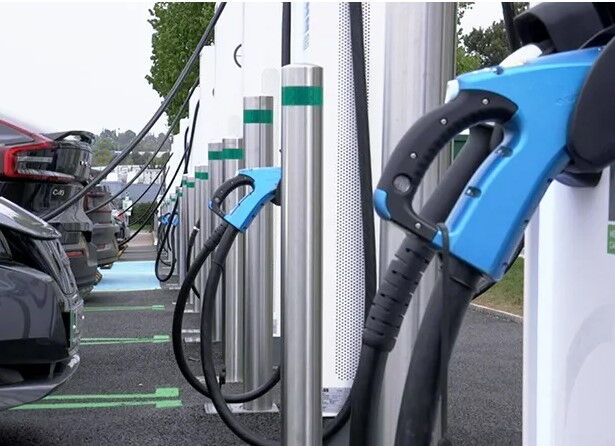
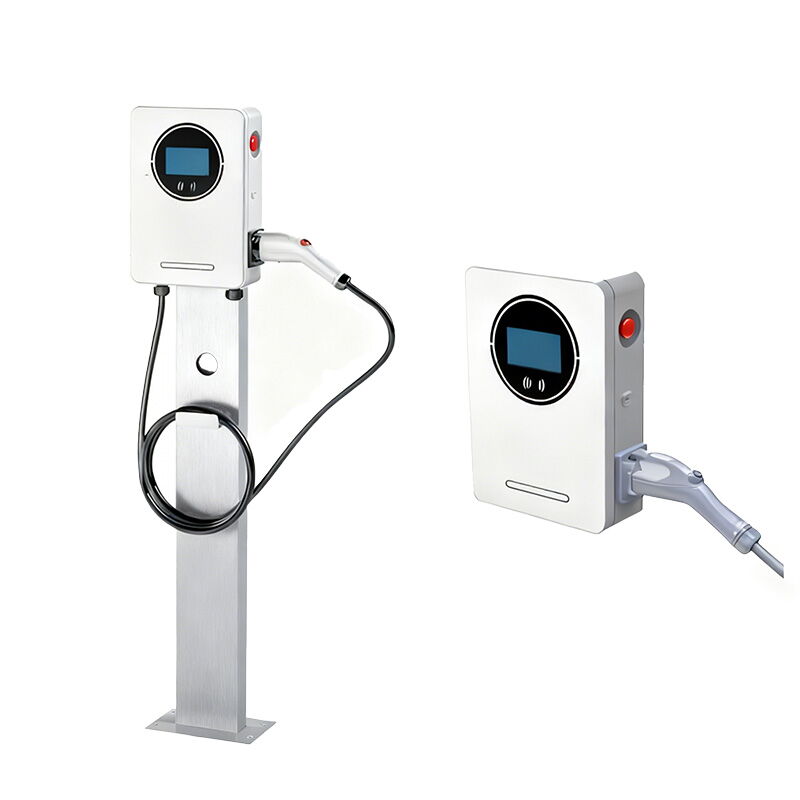
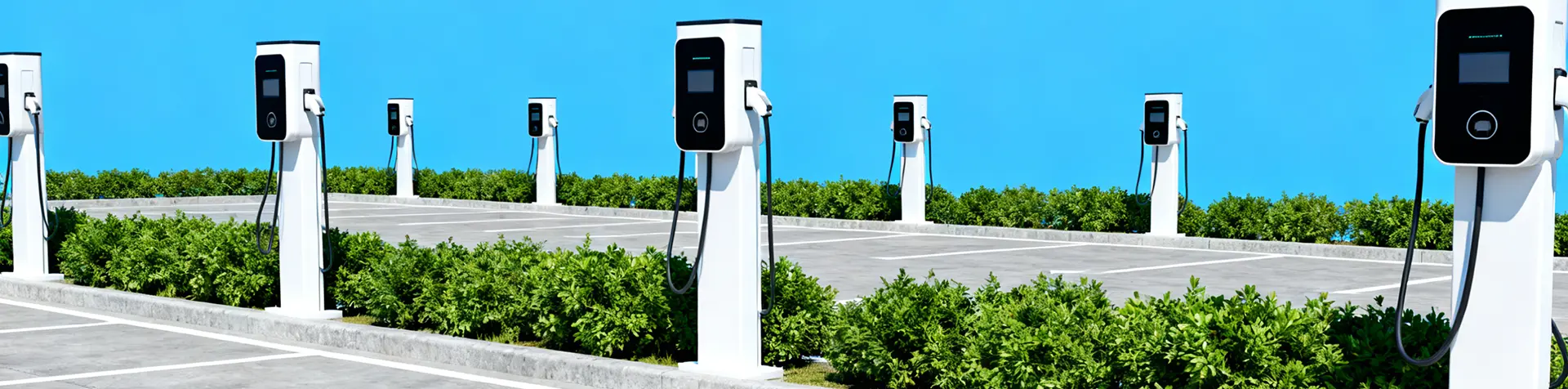
With the rapid development of electric vehicles, ev charging stations, as an essential supporting facility, play a crucial role in the efficient operation of the entire charging network through the choice of communication methods. This article will provide an in-depth discussion of various communication methods for electric vehicle charging stations, including wired and wireless communication, analyzing their advantages, disadvantages, and applicable scenarios, aiming to provide valuable reference for the construction and operation of ev charging stations.
In the selection of communication methods for electric vehicle charging stations, wired communication occupies an important position due to its stable and reliable characteristics. However, this seemingly robust communication method is not perfect, as it faces many limitations and challenges in practical applications.
The wired Ethernet interface is a common communication method for charging stations, mainly using RJ45 cables and optical fibers. The advantage of this method lies in its extremely high data transmission reliability, ensuring accurate information transfer, which is crucial for charging stations that require high data accuracy. At the same time, it has a large network capacity, able to meet the transmission requirements of large amounts of data, whether operational parameters of the charging station or user charging information.
However, wired Ethernet interfaces also have some obvious shortcomings. First, cabling is complex, requiring a large amount of wiring, which makes construction extremely difficult in areas with limited site conditions or in retrofit projects. Second, it has poor scalability; once the lines are laid, adding new charging stations or devices requires re-wiring, which involves high cost and labor. In addition, construction costs are inherently high, as cables, interfaces, and related installation equipment require significant investment. Moreover, coordination is difficult; when multiple departments and stakeholders are involved, coordination becomes very challenging, easily leading to various problems.
Industrial serial buses are also a type of wired communication, commonly including RS485, RS232, and CAN buses. Their advantages lie in reliable data transmission, relatively simple design, and ease of implementation. This allows communication systems to be quickly established in some small-scale charging station scenarios or where communication requirements are not particularly complex.
However, there are also many shortcomings. Network layout is complex, requiring installation according to specific line layouts, and troubleshooting and maintenance are difficult in case of faults. Scalability is poor; as the number of charging stations increases or more devices need to be connected, flexible expansion is difficult. Construction costs increase; although the connection cost of a single device may be low, the overall network construction cost remains high. Coordination is poor, requiring considerable effort to ensure compatibility and coordination between different devices. Furthermore, communication capacity is low, unable to meet the demand for high-speed transmission of large amounts of data, which may create bottlenecks in charging station scenarios requiring real-time monitoring and substantial data interaction.
Wireless communication mainly uses mobile data networks provided by communication operators, such as GPRS, EVDO, CDMA, etc. The advantage of this method is simple installation, with no need for complex cabling, making it an excellent choice for sites without wired communication conditions. In addition, it allows for remote centralized monitoring and batch management, making it convenient for operators to manage and maintain charging stations uniformly.
However, using mobile data services also has some issues. First, monthly rental fees and SIM card annual fees are required. As the number of charging stations increases, these costs will rise, placing significant financial pressure on operators. Second, the data transmission rate and network reliability are limited by the communication operators, unable to fully meet the high-performance operational requirements of charging station equipment. In addition, the bandwidth of mobile access networks is shared; in areas with a large number of devices accessing simultaneously, connection reliability and average bandwidth per client deteriorate, which is detrimental to clustered access and large data transmission for charging stations.

When selecting a communication method for electric vehicle charging stations, multiple key factors need to be comprehensively considered.
- Reliability: The communication system must withstand harsh environments and strong interference or noise while maintaining smooth communication. Charging stations are often exposed outdoors and face various natural environmental challenges, such as wind, rain, high and low temperatures. At the same time, there may be various electromagnetic interference sources nearby, such as high-voltage lines and substations, which require communication equipment to have sufficient anti-interference capability and stability.
- Cost: On the premise of considering reliability, the construction cost and long-term usage and maintenance costs must be taken into account. Wired communication may have advantages in reliability, but construction and later maintenance costs are high. Wireless communication may have lower construction costs, but long-term usage may face high communication fees. A balance must be struck according to the scale and distribution of charging stations.
- Functional Requirements: Not only must the system handle data upload, such as operational data of the charging station and user charging information, but it must also enable control commands, such as remotely starting or stopping the charging station and adjusting charging parameters. With the continuous development of charging station business, the speed requirements for multi-service data transmission are increasing, and the communication method must meet these functional needs.
- Coordination and Scalability: Due to the wide distribution and large number of electric vehicle charging stations, standard communication protocols are required to facilitate installation, commissioning, operation, and maintenance. At the same time, as the number of charging stations increases and business expands, the communication system must have good coordination and scalability, allowing new devices and sites to be easily integrated.
- Networking Device Requirements: Multiple stakeholders are involved on-site, making communication and coordination difficult. Therefore, networking equipment must be simple to install and easy to expand. For sites without wired communication conditions, wireless methods such as GPRS/3G/4G are an effective solution. Additionally, since charging stations are often outdoors in complex environments, networking devices must be industrial-grade products capable of withstanding harsh conditions.
- Remote Monitoring and Management: Due to the dispersed locations and large number of charging stations, networking equipment must support remote centralized monitoring and batch management. By connecting the charging station control board to a DTU (Data Transmission Unit) via a serial port, the wireless DTU can automatically dial and connect to the operator’s GPRS/3G network, establishing a connection with the operator’s monitoring center, thereby creating a transparent channel between the charging facility and the monitoring center. This enables real-time monitoring of operational parameters such as voltage, current, energy, and power, ensuring the safe and stable operation of the charging stations. Additionally, it allows monitoring of the station status, enabling timely maintenance in case of alarms or faults, thereby improving operational efficiency and service quality.
- Networking Solutions for Centralized Charging Stations: In public service sectors such as buses, taxis, sanitation, logistics, and highways, centralized charging stations are generally built. The charging stations within a centralized station can form a LAN using Ethernet, which is then connected to a private network or the Internet through an industrial router as a unified gateway, ultimately connecting to the operator’s monitoring center to achieve bidirectional transmission between the charging facility and the monitoring center. The transparent channel established via the router enables real-time monitoring of operational parameters and status. Moreover, when wired network access is available, wired routers can be used to ensure network access flexibility; when wired networks are unavailable, 3G/4G wireless access can be selected to ensure reliable network connectivity.
To achieve communication and control between electric vehicles and charging stations, an efficient and reliable data transmission method must be used. Common protocols in the market include ZigBee and Wi-Fi.
ZigBee is a low-power wireless network technology suitable for short-distance communication between small devices. It has the advantages of low power consumption, low cost, and large network capacity, making it suitable for scenarios where communication distance is not high and data volume is small. For example, in small charging stations or internal charging station groups, ZigBee can be used for communication and coordination between charging stations.
Wi-Fi is a wireless LAN technology based on the IEEE802.11 standard, featuring higher data rates and greater coverage. It supports high-speed data transmission, meeting the requirements of charging stations for data transmission speed, whether for uploading operational data or user charging information. Wi-Fi also has strong security, supporting multiple encryption methods to protect data and ensure secure information exchange. Additionally, Wi-Fi has good compatibility, allowing it to be used across different vehicle brands, facilitating user charging at various stations. Therefore, Wi-Fi is a better solution for communication protocols in EV charging stations, providing more efficient, secure, and convenient communication services.
The choice of communication method for electric vehicle charging stations is a complex and important issue that requires comprehensive consideration of multiple factors. Wired communication has certain advantages in reliability but suffers from complex cabling and poor scalability. Wireless communication has simple installation and high flexibility but is limited in data transmission speed and reliability. In practical applications, the appropriate communication method should be flexibly chosen based on the distribution, site conditions, and business requirements of the charging stations, or a combination of multiple communication methods can be adopted to achieve the best communication effect.
In summary, the communication method of an electric vehicle charging station is a key link to ensure normal operation and provide high-quality services. Through reasonable selection and optimization of communication methods, the operational efficiency of charging stations can be improved, operating costs reduced, user experience enhanced, and the healthy development of the electric vehicle industry promoted.