An Introduction to Bidirectional EV Charging Technology
Electric vehicles are developing rapidly, and more and more people are choosing electric vehicles as their daily transportation tool. Electric vehicles can not only reduce tailpipe emissions, but also reduce vehicle usage costs. However, as the number of electric vehicles increases, ev charging issues have gradually attracted attention. Traditional charging methods only allow electric vehicles to obtain electricity from the grid, while a new technology called bidirectional ev charging is gradually enabling electric vehicles to become mobile energy storage devices capable of delivering electricity outward. This technology is called vehicle-to-grid interaction technology, and it is changing the way electric vehicles are used in an important way.
Bidirectional electric vehicle charging is a technology that allows electric energy to flow in both directions between electric vehicles and the external environment. Traditional electric vehicle charging is one-way, where current can only flow from the grid to the vehicle battery. Electric vehicles convert AC power into DC power through charging stations and store it in the battery. However, bidirectional charging is different. It allows electric vehicles to convert the stored DC power in the battery back into AC power when needed, and deliver it to the power grid, households, or other devices.
The key to achieving bidirectional charging lies in the inverter. Ordinary electric vehicles are only equipped with devices that convert AC power to DC power, while electric vehicles that support bidirectional charging are equipped with bidirectional inverters. This type of inverter can not only convert AC to DC, but also perform the reverse conversion. When the grid needs power support, or when a household experiences a power outage and requires backup power, the electric vehicle can release the stored energy in its battery.
At present, bidirectional charging technology is still in the early stage of development, and not all electric vehicles support this function. Vehicles that support bidirectional charging require special hardware configurations, and the supporting charging stations must also have bidirectional power transmission capabilities. Therefore, the current popularity of this technology is not high, but it has already shown great practical value.
According to different energy transmission targets, bidirectional charging is mainly divided into four forms: vehicle-to-grid, vehicle-to-home, vehicle-to-load, and vehicle-to-vehicle.
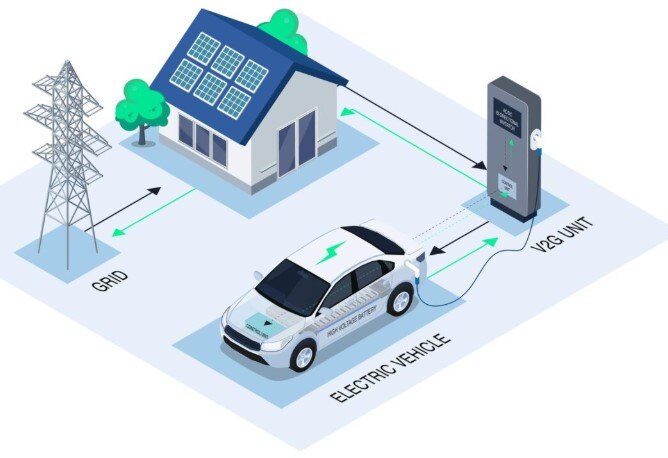
Vehicle-to-grid refers to electric vehicles transmitting electricity from their batteries back to the power grid. During peak electricity demand periods, the grid load is high and power supply may become tight. At this time, electric vehicles with V2G capability can feed stored electricity back into the grid, helping to relieve power supply pressure. Vehicle owners may receive certain economic benefits in this process, because power companies usually pay for electricity fed back to the grid or provide incentive credits.
V2G technology enables electric vehicles to become part of distributed energy resources. When a large number of electric vehicles are connected to the grid, they can charge and store energy during low demand periods and discharge during peak demand periods. This mode helps balance grid load and reduces dependence on peak-shaving power plants.
Vehicle-to-home refers to electric vehicles supplying power to households. When a power outage or electrical failure occurs, electric vehicles can serve as backup power sources for homes and maintain the operation of basic electrical devices. The average daily electricity consumption of a U.S. household is about 32 kilowatt-hours. A 60 kilowatt-hour electric vehicle battery can theoretically support a household’s electricity demand for about two days. If it is a higher-capacity model, such as the Ford F-150 Lightning with a battery capacity of about 98 kilowatt-hours, it can support household electricity consumption for about three days.
The V2H function is particularly useful during extreme weather or natural disasters that cause power outages. Vehicle owners do not need to purchase additional large backup generators and can simply use the electric vehicle parked in the garage to power basic appliances such as refrigerators, lighting, and communication devices. In addition, during periods of high electricity prices, vehicle owners can prioritize using electricity stored in the vehicle battery, thereby reducing electricity costs.
Vehicle-to-load refers to electric vehicles directly supplying power to external electrical devices. This function is suitable for outdoor activities, camping, and field operations. Users can directly connect electric grills, lighting equipment, power tools, and other devices through the vehicle’s power interface without relying on external power sources.
V2L function turns electric vehicles into a mobile power station. For people who enjoy outdoor activities, this function provides great convenience. They can use various electrical devices in places far from the power grid without worrying about power supply.
Vehicle-to-vehicle refers to electric vehicles charging each other. When one electric vehicle has insufficient battery power and there is no charging station nearby, another electric vehicle that supports V2V function can transmit electricity to it. This function has practical significance in emergency rescue, remote areas, or situations where charging infrastructure is incomplete.
V2V technology can alleviate electric vehicle range anxiety. During long-distance travel, if a vehicle’s battery becomes critically low due to unexpected circumstances, other vehicles in the group can provide emergency power support to help it reach the nearest charging station.
Bidirectional charging and smart charging are two different but related concepts. Bidirectional charging emphasizes the directionality of electricity flow. It allows electric vehicles to both obtain electricity from the grid and release electricity to the outside. This bidirectional flow makes electric vehicles part of the energy system rather than just electricity consumers.
Smart charging, on the other hand, focuses on optimizing the charging process. It automatically adjusts charging time and charging power based on grid conditions, electricity price changes, battery status, and other factors through algorithms and communication technology. For example, a smart charging system can automatically start charging during low-price late-night periods and pause or reduce charging power during periods of high grid load. The purpose of smart charging is to reduce charging costs, minimize impact on the grid, and improve charging efficiency.
In simple terms, bidirectional charging solves the problem of whether electricity can flow in reverse, while smart charging solves the problem of when charging is most appropriate. The two can be combined to form a more efficient electric vehicle energy management solution.
A complete bidirectional charging system usually includes three core components: an electric vehicle that supports bidirectional charging, a bidirectional charging station, and an energy management system.
An electric vehicle that supports bidirectional charging needs to be equipped with a bidirectional charger and a bidirectional inverter. These hardware devices are responsible for converting AC power into DC power during charging and storing it in the battery, and converting DC power back into AC power during discharging.
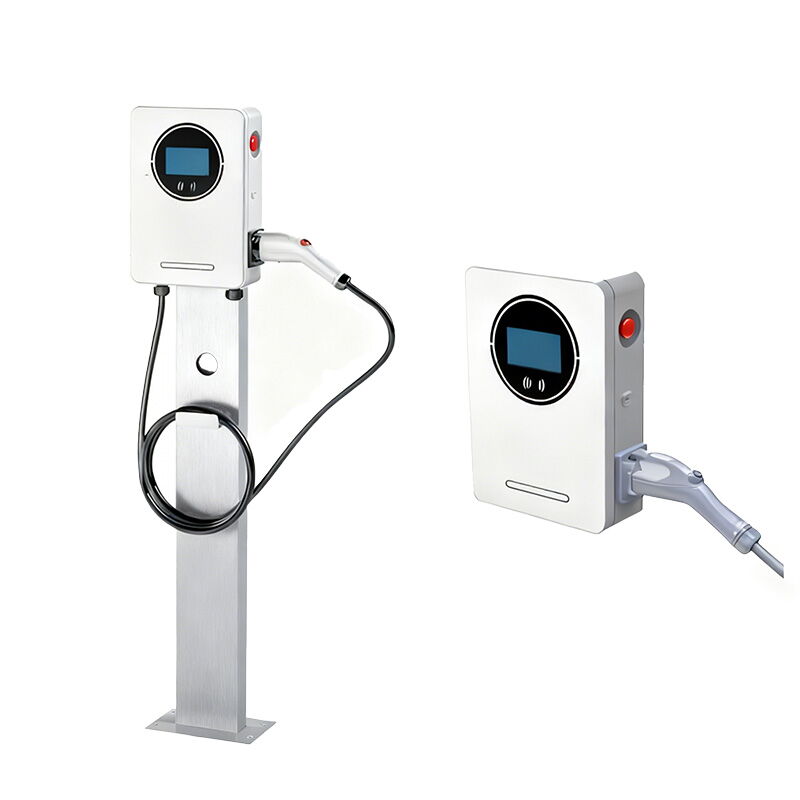
A bidirectional charging station is a key device connecting the vehicle with the grid or household circuit. Unlike ordinary charging stations that can only transmit power in one direction, bidirectional charging stations can control two-way energy flow. In essence, they are not only power transmission devices but also undertake energy conversion and flow control functions.
The energy management system is the brain of the entire bidirectional charging system. It monitors grid conditions, battery level, and electricity demand information, and accordingly determines when to charge, when to discharge, and how much to discharge. When grid demand is high, the energy management system instructs the vehicle to feed power back to the grid. When grid power is sufficient and electricity prices are low, the system arranges vehicle charging. At the same time, the energy management system also considers battery charging plans, electricity price trends, and battery health status to optimize the entire charging and discharging process, extend battery life, and reduce usage costs.
Bidirectional charging brings several real-world benefits that go beyond simple vehicle charging, turning EVs into active energy assets.
Bidirectional charging can help users save electricity costs. Vehicle owners can charge during periods of low electricity prices and use electricity from the vehicle battery during periods of high electricity prices, or sell electricity back to the grid for profit. This “buy low, use high” model effectively reduces overall electricity costs. For households with solar power systems, excess solar energy generated during the day can be stored in the vehicle battery and used at night, further increasing self-consumption ratio.
Electric vehicle batteries have large capacity and can provide reliable backup power for households. During power outages, a typical electric vehicle battery can support basic household electricity consumption for several days. This is more reliable than traditional small backup power supplies or generators and does not require additional fuel storage. For people living in areas with unstable power supply, this function provides important electricity security.
Renewable energy sources such as solar and wind power are intermittent and unstable due to weather conditions. Bidirectional charging technology can use electric vehicles as energy storage devices, storing excess electricity when renewable energy generation is sufficient and releasing electricity when generation is insufficient. This model improves the utilization efficiency of renewable energy, reduces dependence on fossil fuel power generation, and helps promote clean energy development.
As the number of electric vehicles continues to increase, if all vehicles charge at the same time, it will put great pressure on the grid. Bidirectional charging technology allows electric vehicles to become flexible regulation resources for the grid. A large number of electric vehicles can charge when grid load is low and discharge when grid load is high, playing a role in peak shaving and valley filling. This distributed energy storage approach reduces the need for new peak-shaving power plants and improves grid operation efficiency and stability.
At present, some vehicle models on the market already support bidirectional charging functions. These models include Ford F-150 Lightning, Nissan Leaf, Hyundai Ioniq 5 and Ioniq 6, Kia EV6 and EV9, Genesis GV60, Lucid Air, Mitsubishi Outlander PHEV, and Tesla Cybertruck. Some automakers also plan to add bidirectional charging capabilities to future models.
In terms of charging equipment, some products supporting bidirectional charging are already available in the market. For example, Wallbox Quasar 2, dcbel r16, Fermata Energy FE-15, and Nuvve PowerPort. These devices can work with electric vehicles that support bidirectional charging to implement V2G, V2H, and other functions. As technology matures and market demand grows, more manufacturers are expected to enter this field and launch more types of bidirectional charging equipment.
Bidirectional electric vehicle charging technology is changing the traditional perception of electric vehicles. Electric vehicles are no longer just transportation tools that consume electricity, but can become mobile energy storage devices that support the grid, serve households, and facilitate daily life. Through four forms—V2G, V2H, V2L, and V2V—bidirectional charging technology demonstrates significant advantages in terms of economy, safety, and environmental friendliness.
For ordinary consumers, understanding bidirectional charging technology helps them make more suitable choices when purchasing electric vehicles. As more vehicles support bidirectional charging and charging infrastructure becomes more complete, this technology will gradually enter more households. In the future, electric vehicles are expected to become important nodes in the energy internet, playing a greater role in promoting energy transition and improving power system flexibility.