An Introduction to Solar Panel Electric Vehicle Charge
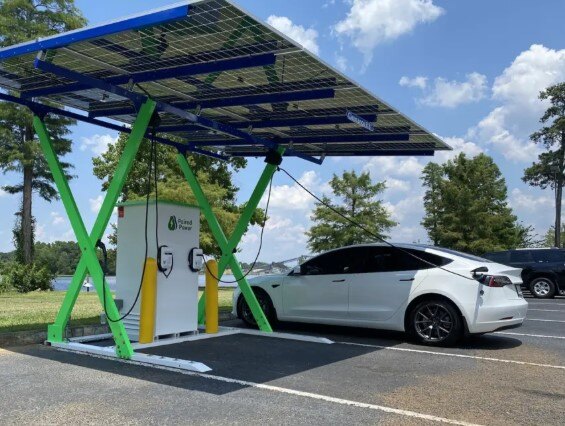
A solar panel electric vehicle charger is a device that uses solar energy to charge electric vehicles. In simple terms, it is a system that converts sunlight into electrical energy and then uses that energy to charge your vehicle's battery. The system mainly consists of three parts: solar panels, an inverter, and an electric vehicle charger.
The working principle is straightforward. First, solar panels installed on rooftops or other locations capture sunlight and convert it into direct current (DC) electricity. Next, the inverter converts the DC electricity into alternating current (AC), since most household appliances and electric vehicle chargers require AC power to operate. Finally, the electric vehicle charger transfers the AC electricity to the vehicle battery to complete the charging process.
Each component is essential. Solar panels are responsible for energy collection, the inverter performs power conversion, and the charging station serves as the interface where the electric vehicle is connected for charging. With proper installation and calibration, these three parts work together to provide stable and efficient charging services for your vehicle.
A complete solar-powered electric vehicle charging system consists of three core components working in coordination: solar panels capture solar energy, the inverter converts electricity, and the charging station delivers the final power supply. Each component plays a specific role and is indispensable. Below is a detailed explanation of the functions and selection considerations for each part.
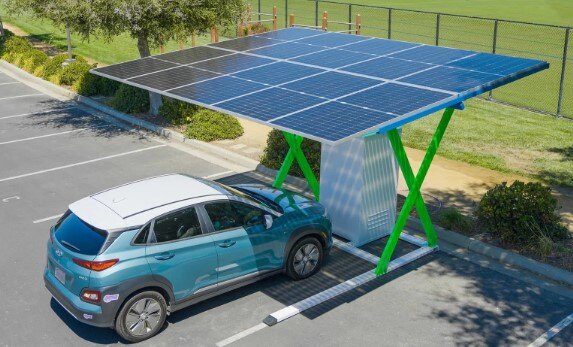
Solar panels form the foundation of the system by capturing sunlight and converting it into electrical energy. Selecting suitable solar panels depends mainly on two factors: available roof space and the vehicle's charging power requirements.
Currently, standard residential solar panels usually have power ratings ranging from 250 to 400 watts. For example, if a 300-watt solar panel receives about 8 hours of effective sunlight per day, it can generate approximately 2.4 kWh of electricity daily. If ten such panels are installed on a rooftop, the system can produce about 24 kWh of electricity per day.
What does this mean in practical terms? For an electric vehicle with a 60 kWh battery capacity, 24 kWh of electricity can provide roughly 40% of the vehicle's driving range. This amount of energy is generally sufficient for daily commuting and short-distance travel.
The inverter converts the direct current generated by solar panels into alternating current. This step is crucial because most household appliances and electric vehicle chargers operate on AC power.
The importance of the inverter lies in two aspects. First, it determines the efficiency of solar energy conversion into usable electricity, as a high-quality inverter minimizes energy losses. Second, it ensures system safety by preventing overloads and other electrical issues.
When selecting an inverter, its power capacity must be considered. If the inverter is already operating near its rated power limit, upgrading to a higher-capacity model may be necessary when adding electric vehicle charging functionality.
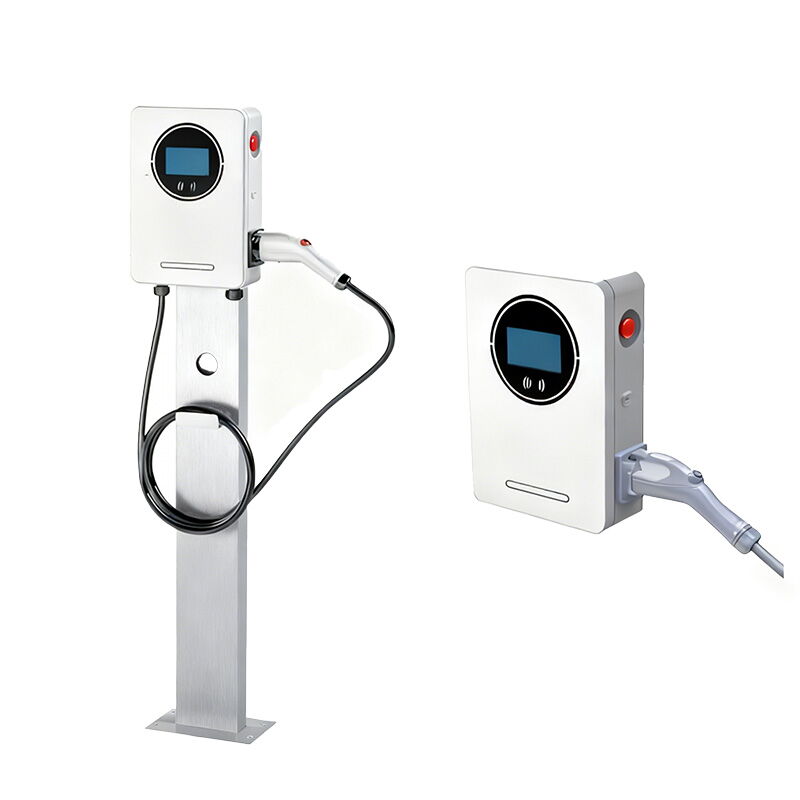
This is the interface where the electric vehicle is actually connected for charging. Charging stations are generally divided into different levels, with Level 1 and Level 2 chargers being the most common.
Level 1 chargers use standard household outlets and provide relatively slow charging speeds but are easy to install without special wiring. Level 2 chargers offer much faster charging but require a dedicated 240-volt electrical line. For home use, Level 2 chargers are a good choice because they significantly reduce charging time.
Some charging stations are specially designed for solar power systems and can work more efficiently with photovoltaic installations.
After understanding the system components, it is helpful to see how the entire system operates.
When sunlight strikes the solar panels, the panels convert solar energy into direct current electricity. This current is transmitted through wiring to the inverter, which converts it into alternating current. The electricity can then be used to power household appliances or transmitted to the electric vehicle charging station.
When you plug your electric vehicle into the charging station, the vehicle draws power from the solar energy system. If the solar panels are generating electricity at that moment, your car will be charged directly using clean solar energy. If the system produces more electricity than the vehicle requires, the excess energy can be stored in a home battery or fed back into the power grid.
The greatest advantage of this charging method is its environmental friendliness. The entire process produces no carbon emissions and relies entirely on solar energy, a virtually inexhaustible resource.
Compared with traditional grid charging or public charging stations, solar charging offers several practical benefits in terms of cost, environmental protection, energy independence, and convenience.
Using solar energy to charge electric vehicles can dramatically reduce electricity expenses compared to grid power. Real-world data shows that solar charging can be about 80% cheaper than public charging stations.
Consider a simple example. If you need to charge your electric vehicle daily, public charging may cost several tens of dollars per session. With a home solar charging system, once the installation is completed, the ongoing electricity cost is nearly zero. Over the long term, the savings are considerable.
In addition, having a home solar charging station allows you to charge your vehicle at night without traveling to public charging locations, saving both time and money.
Charging electric vehicles with solar energy eliminates carbon emissions associated with fossil fuel power generation. Although electric vehicles themselves do not emit exhaust gases, indirect carbon emissions still occur if grid electricity comes from coal-fired generation. Solar charging completely avoids this issue.
From a global perspective, environmental protection is becoming an irreversible trend. Many countries have set targets to phase out internal combustion engine vehicles in the coming decades. Owning an eco-friendly and independent solar charging network not only aligns with policy trends but also adds substantial practical value to your electric vehicle.
By generating your own electricity, you can reduce dependence on the power grid and mitigate the risk of electricity price fluctuations. During periods of power shortages or rising electricity prices, this independence becomes particularly valuable.
For residents living in areas with frequent power outages, solar charging systems are an ideal solution. When combined with energy storage batteries, the system can still charge your vehicle even during grid interruptions, ensuring uninterrupted travel.
Having a home solar charging station offers great convenience. You no longer need to search for public charging stations, worry about occupied charging spots, or wait for charging to finish. Simply park at home in the evening, plug in the charging cable, and drive out the next morning with a fully charged vehicle.
Many vehicle owners wonder how much electricity solar panels can generate and whether it is sufficient.
According to data from the United Kingdom, a typical residential solar photovoltaic system can generate about 3 to 5 kWh of electricity per day. This is usually enough to fully charge a 40 kWh electric vehicle battery. Under standard charging conditions, a full charge may take about 10 hours.
In terms of the number of solar panels, small electric vehicles may only need 2 to 4 panels per day for charging. Larger vehicles or households operating multiple electric vehicles will require more panels.
It should be emphasized that building a solar-powered electric vehicle charging station does not necessarily require a large-scale solar system. Even a small installation can meet most daily driving needs if the vehicle is used primarily for short-distance travel. The combination of solar energy and electric vehicle charging is always a smart choice for saving money and promoting green transportation.
After recognizing the advantages of solar charging, you may consider installing such a system at home. From planning to operation, several steps are involved in the installation process. Below are five key stages for setting up a solar electric vehicle charging system.
Before installation, you must first understand your actual needs. Consider questions such as: How often do you drive your electric vehicle? How many kilometers do you travel daily? How long does it take to fully charge your vehicle?
Most electric vehicle charging stations are rated by power output and are generally classified into three levels. Level 1 uses standard household outlets and charges slowly. Level 2 provides faster charging but requires dedicated wiring. Level 3 offers the fastest charging speed but is usually found only in public charging stations. For home use, Level 2 charging is the best option, balancing charging speed and installation cost.
You should also review your home's current energy consumption. These considerations will help you design a suitable solar electric vehicle charging system.
There are various types of electric vehicle chargers available on the market for different vehicle models. Some smart chargers are equipped with advanced Wi-Fi connectivity and can be controlled remotely via mobile applications. Others are simple plug-and-play devices.
When selecting a charger, pay attention to three factors. First, ensure compatibility with your vehicle. Second, choose safe and well-reviewed products by checking user reviews on popular online platforms. Third, decide whether you need a portable or wall-mounted charger.
Level 2 chargers usually provide a driving range of about 25 to 40 kilometers per hour of charging and typically require a 240-volt power supply. Some charging stations are specifically designed to work with solar systems.
The scale of the solar system depends on your required electricity consumption. If your home already has solar panels installed, additional panels may be needed for the electric vehicle charging project.
You should also check the inverter capacity. If the existing inverter is already operating near its rated capacity, upgrading to a higher-power model may be necessary. Since many users prefer nighttime charging, adding energy storage batteries is also highly recommended.
During planning, consider how many solar panels are required, how much roof space is available, and the total cost of installation. Small electric vehicles may only need 2 to 4 panels per day, while larger vehicles or multi-vehicle households may require more panels.
Once planning is complete, the system can be installed. Although self-installation is theoretically possible, it is strongly recommended to hire a licensed electrician or solar installer. Professional installation ensures system reliability and safety.
Installation steps include selecting an appropriate location for the charger, connecting the charger to the solar system, and testing all components to ensure proper operation. After installation, it is advisable to monitor the system for 2 to 3 days, tracking the charging time required for the vehicle to ensure everything functions correctly.
After the system is operational, regular monitoring is important. You should track how much solar energy is generated, how much energy the vehicle consumes, and the household electricity usage.
Connecting the solar system to a virtual power plant or smart solar network allows you to monitor electricity consumption monthly. If the electric vehicle charging station consumes excessive power, the system configuration may need adjustment.
In terms of maintenance, keeping the solar panels clean is essential. To maximize efficiency, it is recommended to clean the panel surfaces several times a year to remove dust and dirt.
Although solar electric vehicle charging has many advantages, there are some limitations that should be understood.
First is installation cost. Solar panels, inverters, charging equipment, and possible energy storage batteries require significant initial investment. However, considering long-term electricity savings, this investment can usually be recovered within a few years.
Second is weather dependence. Solar panels require sunlight to generate electricity, and power generation may drop significantly on cloudy or rainy days. In regions with short daylight hours during winter, grid electricity may be needed as a supplement.
In addition, the system may not generate enough power to fully charge the electric vehicle on every sunny day, especially during periods of high energy demand. Therefore, many users choose to keep a grid connection as a backup power source.
A solar panel electric vehicle charger is an effective solution for reducing carbon footprint and saving electricity costs. It combines clean, renewable solar energy with electric vehicles to achieve truly green transportation.
Through proper planning and professional installation, even a small solar system can meet the daily charging needs of commuting vehicles. Although the initial investment is relatively high, the long-term economic and environmental benefits make it a worthwhile choice.
As the global transition toward electrification accelerates, installing a home solar charging station is not only a lifestyle decision but also an investment in future energy trends. The combination of solar energy and electric vehicles represents the future of smart transportation.