CCS Charging Standard: Unifying Electric Vehicle Charging
In the rapidly evolving field of new energy vehicles, the unification of ev charging standards has become a key driver for the industry's growth. Imagine how chaotic and inconvenient it would be if your smartphone required a different charger each time you needed to charge it. Fortunately, automakers have recognized this issue and are working to address it. Today, let's take a deep dive into the Combined Charging System (CCS) standard and explore how it is bringing unity and convenience to global electric vehicle (EV) charging.
With growing global attention on environmental protection and sustainable development, electric vehicles (EVs), as clean energy transportation tools, have gained increasing popularity among consumers. However, behind the booming EV market lies a pressing problem, the chaotic state of charging interface standards. Before 2011, the electric vehicle markets in Europe, North America, and Asia developed different charging standards, which not only caused significant inconvenience for consumers but also posed substantial barriers to the global promotion and adoption of electric vehicles. For example, an electric vehicle purchased in Europe might not be able to find compatible charging infrastructure in North America or Asia, and vice versa. To resolve this issue, the European Automobile Manufacturers Association (ACEA) proposed the CCS charging standard in 2011, aiming to integrate AC and DC charging into a unified system, thus ensuring global interoperability and convenience in charging.
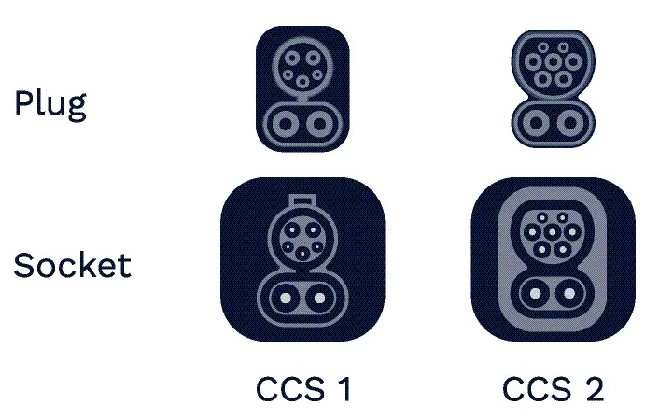
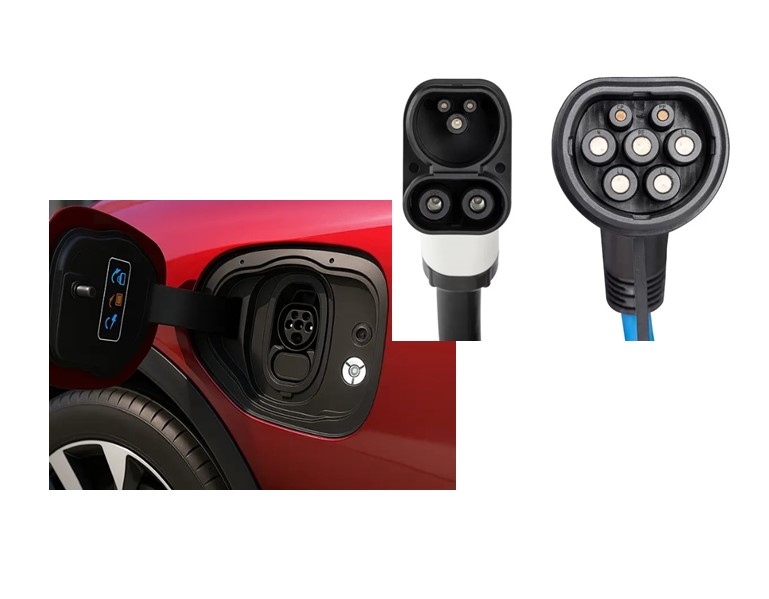
The CCS standard, or Combined Charging System, is an innovative charging solution that integrates both AC and DC charging into a single physical interface. This means that whether it's single-phase AC charging, three-phase AC charging, home DC charging, or ultra-fast DC charging, all can be completed through the same interface. This design not only greatly enhances the flexibility of charging but also reduces the complexity of charging equipment. For example, EV owners no longer need to carry multiple charging adapters. A single CCS interface charger can be used in different charging scenarios. Additionally, the CCS standard offers the following notable advantages:
With the growing popularity of electric vehicles, consumers are demanding faster charging speeds. The CCS standard has been continuously upgraded to increase charging power. For example, the CCS Combo 2.0 version, released in 2014, further boosted charging power, supporting faster DC charging. This means that EV owners can charge their vehicles in a shorter time, improving the convenience of using electric vehicles.
Safety is critical during the electric vehicle charging process. The CCS standard takes this into account by incorporating advanced communication technologies and safety protocols to ensure secure charging. For example, the Control Pilot (CP) interface in the CCS standard transmits PWM signals for AC charging control and modulated signals based on power line communication (PLC) to establish high-level communication. Furthermore, CCS integrates Transport Layer Security (TLS) encryption, digital certificates, and XML-based digital signatures to enhance communication security.
The CCS standard not only improves the flexibility and speed of charging but also greatly enhances the user experience by introducing features like Plug and Charge (PnC). In PnC mode, users do not need to perform any manual operations. Identification and billing information can be automatically exchanged between the EV and the charging station (EVSE) via high-level communication. This means that users simply need to plug in their vehicles to the charging station, and charging will start automatically, without the need for complex procedures.
The development of the CCS standard dates back to 2011 when the European Automobile Manufacturers Association (ACEA) proposed the CCS charging standard. In 2012, eight major manufacturers from the U.S. and Germany, including Ford, General Motors, Chrysler, Audi, BMW, Mercedes-Benz, Volkswagen, and Porsche, jointly released the CCS standard, marking the official birth of this standard. Since then, the CCS standard has undergone continuous technological upgrades and iterations to meet market needs.
- 2012: CCS Combo 1.0 Released: The release of CCS Combo 1.0 marked the official birth of the CCS standard. This version integrated AC and DC charging into a single physical interface, offering electric vehicles more flexible charging options.
- 2014: CCS Combo 2.0 Released: In 2014, CCS Combo 2.0 was released, an important upgrade to the previous version. It further increased charging power and supported faster DC charging. This version of the CCS standard was widely adopted in Europe and North America.
- 2017: CCS Combo 2.0.1 Released: In 2017, the CCS standard underwent its first iteration with the release of CCS Combo 2.0.1. This version further enhanced charging power and optimized safety.
- 2020: CCS Combo 2.0.2 Released: In 2020, CCS Combo 2.0.2 was released, the second iteration of the CCS standard, which further improved charging power and safety, providing better support for fast charging.
The promotion of the CCS standard has received strong support from global automakers and related organizations. In 2012, the SAE (Society of Automotive Engineers) selected CCS as its standard, laying the foundation for its promotion in the U.S. market. In 2017, the European Automobile Manufacturers Association (ACEA) announced that it had chosen CCS as the DC/AC charging interface and would use it for all plug-in hybrid electric vehicles (PHEVs) sold in Europe starting from 2017. This decision greatly accelerated the adoption of the CCS standard in the European market.
In China, with the rapid development of the new energy vehicle industry, the CCS standard has also gradually gained recognition. In 2022, Germany and China unified EV charging standards, and China officially joined the European and American CCS camp. This move brought unprecedented opportunities for the development of electric vehicles in China.
The technical details of the CCS standard are key to its success. The CCS standard involves several international standards, including the IEC 61851 series, DIN 70121, and ISO 15118 standards. These standards together form the technical foundation of the CCS standard.
The IEC 61851 series standards, developed by the IEC, are the earliest international charging system standards and can be considered the cornerstone of charging standards. IEC 61851-1 specifies the general requirements for charging systems, particularly for AC charging. AC charging control guidance is achieved by detecting voltage changes at the CP line via the charging gun's connection and controlling the S2 switch at the vehicle end. Additionally, charging stations inform the vehicle of the maximum available current through PWM signals with varying duty cycles.
DIN 70121, published by the German Institute for Standardization in 2012, is a normative standard for digital communication between electric vehicles and DC charging stations. Based on earlier versions of IEC 61851-23 and ISO 15118, the DIN 70121 standard defines the communication protocols for the DC charging process. It specifies the use of the CP signal line for transmission, PLC for data links, and MAC and TCP/IP for network layers. Furthermore, it standardizes high-level communication handshakes, interactions, and message contents.
The ISO 15118 standard is an important component of the CCS standard. It adds support for AC charging and introduces two user identification methods: External Identification Mode (EIM) and Plug and Charge (PnC). ISO 15118 also introduces the concept of smart charging, allowing vehicles to schedule charging times based on grid capacity and energy costs. To ensure the security of functions like Plug and Charge (PnC), ISO 15118 requires Transport Layer Security (TLS) encryption, digital certificates, and XML-based digital signatures. ISO 15118 clearly defines the protocol stack for high-level communication in CCS charging, enabling high-level communication for both AC and DC charging to support PnC or value-added features.
Despite significant technological progress, the CCS standard still faces some challenges during its adoption. First, the application cost of the CCS standard is relatively high. The introduction of PLC communication and high-level encryption technologies in CCS increases the cost of charging equipment. Additionally, the quality of charging cables must meet high standards for PLC communication, raising maintenance costs for the equipment. Furthermore, inconsistencies in standards across different countries and regions still exist. While the CCS standard has been widely adopted in Europe and North America, other regions, such as Asia and Africa, still use different charging standards, which poses challenges for the global promotion of electric vehicles.
However, the CCS standard also presents enormous opportunities. With the global emphasis on environmental protection and sustainable development, the electric vehicle market is growing rapidly. The unification and flexibility of the CCS standard make it the preferred choice for future electric vehicle charging. Moreover, continuous upgrades and innovations to the CCS standard, such as the introduction of Vehicle-to-Grid (V2G) functionality, provide support for the development of smart grids and offer more possibilities for the future of electric vehicles.
The introduction of the CCS standard brings hope for the unification and convenience of global electric vehicle charging. By integrating AC and DC charging into a single physical interface, the CCS standard not only improves the flexibility and speed of charging but also enhances the safety of the charging process. As the CCS standard continues to evolve and innovate, it will continue to drive the growth of the electric vehicle industry and contribute to achieving global sustainable transportation goals. With the widespread adoption of the CCS standard globally, we can expect electric vehicle charging to become simpler, faster, and safer in the future.