The Rise of 800V Architecture in Electric Vehicle Charging
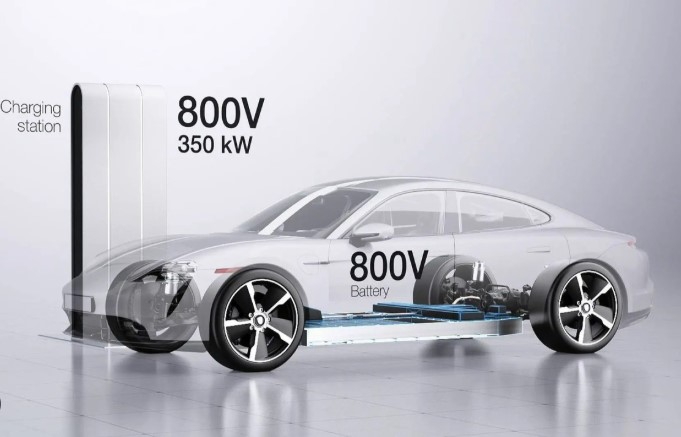
In today's rapidly developing era, the electrification revolution of the automotive industry is advancing at an unprecedented speed. As OEMs successively launch new vehicle models powered by 800V battery systems, the electric vehicle industry has entered a brand-new stage of development. These 800V batteries not only enable more powerful powertrains and higher vehicle performance, but also significantly accelerate the ev charging process, providing users with a more convenient mobility experience. However, amid this promising outlook, there are also several urgent issues that need to be addressed, among which the most prominent is the incompatibility of DC fast charging.
- More Powerful Power and Performance: Electric vehicles powered by 800V battery systems offer significant advantages in terms of power and performance. Higher voltage allows for greater power output, enabling faster acceleration and more responsive vehicle behavior. This means drivers can enjoy a superior driving experience, whether maneuvering through city streets or overtaking on highways. Such high-performance characteristics make electric vehicles more competitive against traditional internal combustion engine vehicles.
- Faster Charging Speed: Another important advantage of 800V batteries is their faster charging speed. Compared with traditional 400V batteries, 800V batteries can receive more power during charging, thereby significantly reducing charging time. This is a major benefit for long-distance travel, as vehicle owners can replenish sufficient energy in a shorter period, reducing waiting time and improving overall travel efficiency.
- More Efficient Energy Utilization: 800V battery systems are also more efficient in terms of energy utilization. Due to the higher voltage and relatively lower current, energy losses generated during charging are reduced. This means more electrical energy can be effectively converted into vehicle power, improving the overall efficiency of the system. In addition, 800V battery systems can further enhance energy utilization efficiency by optimizing battery configurations and making more effective use of the power supply.
- Lighter Vehicle Weight: Electric vehicles adopting an 800V architecture are also lighter in design. As voltage increases, vehicle cables can be made thinner and connectors smaller, thereby reducing overall vehicle weight. This has a positive impact on both driving range and performance. A lighter vehicle can travel longer distances and also deliver better acceleration and braking performance.
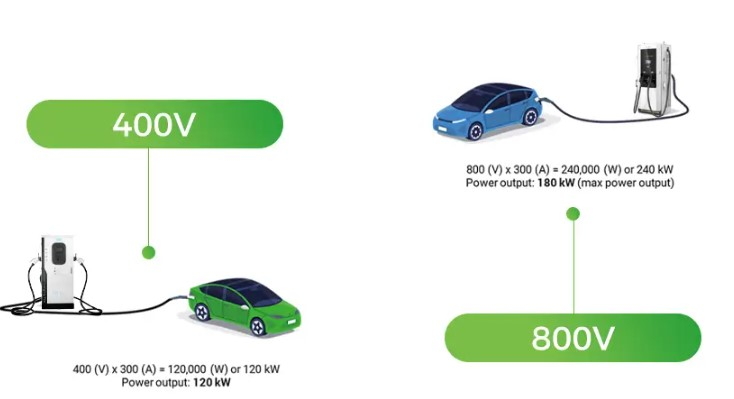
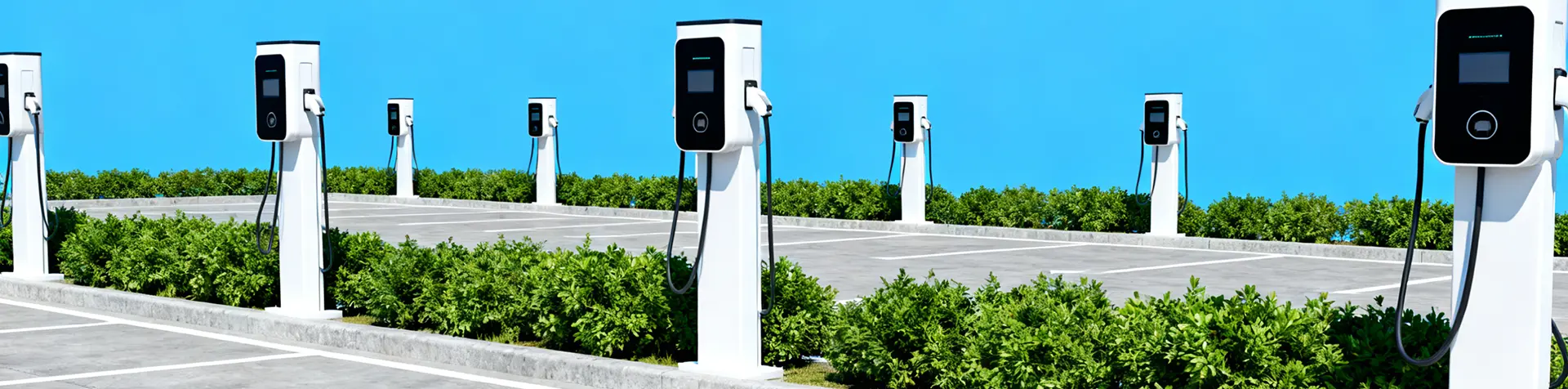
Despite the many advantages brought by 800V batteries, DC fast-charging incompatibility has become a major constraint in real-world applications. At present, most public charging stations are still based on 400V systems, and these stations are not compatible with 800V electric vehicles. This means that even if a vehicle is capable of fast charging, it cannot fully realize its potential without matching charging infrastructure.
400V charging stations are not only incompatible with new 800V electric vehicles, but also face considerable limitations in current capacity, cable thermal management, and voltage range. As current increases, larger cables are required to allow electrons to pass through, which not only increases costs but may also lead to issues such as cable overheating. In addition, charging speeds at 400V stations are relatively slow and cannot meet the demand for fast charging during long-distance driving.
The incompatibility between existing charging infrastructure and 800V vehicles is a major source of current range anxiety. Range anxiety refers to the psychological concern among electric vehicle users that their vehicle may run out of power during travel without being able to find charging facilities in time. This anxiety is particularly evident during long-distance trips, as users cannot be certain whether sufficient fast-charging stations will be available along the route. If OEMs are to continue promoting vehicle electrification, this issue must be resolved to strengthen consumer confidence in electric vehicles.
Charging Station Upgrades: One way to address DC fast-charging issues is to upgrade charging stations. Expanding the DC fast-charging network can alleviate this problem, but it may be neither the fastest nor the most cost-effective solution. There are two approaches to expanding the DC fast-charging network:
Installing new DC fast-charging stations with a wide voltage range (from 250 to 920V) is one solution, but it requires significant time and financial investment. Currently, there are approximately 1,000 charging stations in Europe and North America that provide 800V charging, accounting for only about 2% of all DC charging stations in operation. To accommodate the growth of 800V electric vehicles, the network would need to add hundreds or even thousands of such stations. Installing so many new charging stations would take several years and involve extremely high costs.
Another approach is to utilize existing 400V charging stations and upgrade them to also support 800V voltage. However, this method also faces a series of challenges. Charging at ultra-high power rates (above 150 kW) is not always available or achievable due to factors such as temperature limitations and battery degradation. In addition, charging speeds would still be slower than what is expected from native 800V systems.
Compared with expanding the charging network, onboard conversion solutions provide a more comprehensive approach to achieving compatibility with both 400V and 800V systems. Using modular DC–DC virtual batteries for onboard charging offers high flexibility and efficiency of up to 99.5%. This solution can be adopted more quickly and does not require capital investment in charging infrastructure.
The incompatibility between 800V batteries and 400V chargers can be resolved through “battery virtualization.” With battery virtualization, even when an 800V battery is connected on one end of the onboard charger, the charger can “detect” a 400V battery on the other end. This solution starts at the battery voltage level and adapts it to the voltage range accepted by the charging station. The application of this technology allows vehicles to fast-charge at existing 400V charging stations without waiting for the construction of new 800V charging infrastructure.
Although 800V high-voltage platforms theoretically provide significant improvements in charging speed, many challenges remain in real-world applications. These challenges stem not only from charging infrastructure development, but also from extreme weather conditions, grid limitations, and charging station maintenance.
Currently, most public charging stations are still based on 400V systems and lack sufficient 800V compatibility. This means that even if vehicles are capable of fast charging, they cannot fully utilize their potential without matching charging facilities. To overcome this challenge, greater investment in charging networks is required, particularly by adding more 800V fast-charging stations in urban centers and along highways. At the same time, encouraging private-sector participation through subsidy policies can lower entry barriers for operators and accelerate infrastructure development.
In low-temperature environments, the chemical reaction rates of lithium batteries slow down, thereby affecting charging speed. Although manufacturers have adopted various measures to improve this situation, such as heating systems, the effectiveness is limited. To address this challenge, automakers need to continuously optimize product design, particularly battery management and thermal control strategies for different climate conditions. By adopting advanced battery management systems and heating technologies, charging performance in low-temperature environments can be effectively improved.
Grid limitations and inadequate charging station maintenance are also common issues that prevent actual charging power from reaching expected levels. To resolve these problems, power grids need to be upgraded to ensure they can withstand higher voltages and currents. At the same time, charging station maintenance and management should be strengthened to ensure normal operation and improve charging efficiency.
With technological progress and improvements in infrastructure, 800V high-voltage platforms are expected to become mainstream in the coming years. This means that more vehicle models supporting 800V fast charging will enter the market, and future electric vehicles will become more competitive, not only outperforming internal combustion vehicles in performance, but also catching up in terms of convenience.
The widespread adoption of 800V high-voltage platforms will intensify competition in the electric vehicle market. Automakers will be forced to continuously enhance product performance and charging efficiency to attract more consumers. This will drive overall industry development and accelerate the adoption of electric vehicles.
For everyday consumers, the 800V high-voltage platform brings not only faster charging speeds, but also a transformation in lifestyle. Faster charging means users can replenish sufficient energy in a shorter time, reducing waiting periods and improving travel efficiency. In addition, higher performance and longer driving range will deliver a superior driving experience.
To make 800V high-voltage platforms truly mainstream and deliver tangible benefits to consumers, joint efforts across and beyond the industry are required to overcome challenges. Automakers should strengthen cooperation with suppliers to jointly promote innovation in key components, reducing costs and improving reliability. At the same time, establishing a unified standard system is critical. Only when different brands are mutually compatible can economies of scale be achieved and more users attracted to these vehicles.
The 800V high-voltage platform represents the future of electric vehicle charging. It can significantly shorten charging time, enhance vehicle performance and energy utilization efficiency, and provide consumers with a more convenient mobility experience. However, achieving this goal requires overcoming multiple challenges, including charging infrastructure development, the impact of extreme weather conditions, grid limitations, and charging station maintenance. Through joint efforts across the industry, increased investment in charging networks, optimized product design, and strengthened cooperation and innovation, the 800V high-voltage platform is expected to become mainstream in the coming years, delivering a better and more convenient mobility experience for consumers.