NACS: Tesla's North American EV Charging Standard
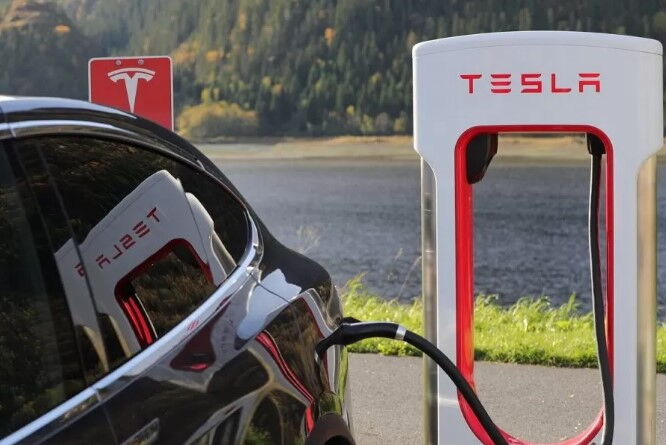
With the rapid growth of the global electric vehicle market, the construction of charging infrastructure has become one of the key factors in the development of the industry. Different automakers and regions adopt different ev charging standards, which to some extent affects user convenience and charging efficiency. As a representative of industry innovation, Tesla developed the NACS (North American Charging Standard), which, through its unique technical design and efficient charging experience, is reshaping the electric vehicle charging ecosystem in North America and even globally. This article will provide a comprehensive analysis of this standard from the aspects of NACS's origin and development, technical advantages, market position, and future prospects.
NACS, or the North American Charging Standard, is an electric vehicle charging connector standard developed by Tesla. It was originally called the Tesla connector and charging port, but was recently renamed NACS to better reflect its positioning as a universal charging standard in North America.
Since launching electric vehicles, Tesla has been committed to building an efficient and convenient charging network. The design intention of NACS was to meet the charging needs of Tesla vehicles, but as the electric vehicle market continued to expand, Tesla realized the need for a more widely accepted standard to drive the development of the entire industry. By the end of 2024, the number of NACS outlets in North America exceeded the total of all CCS networks by more than 60%, marking NACS's overwhelming lead in charging infrastructure coverage.
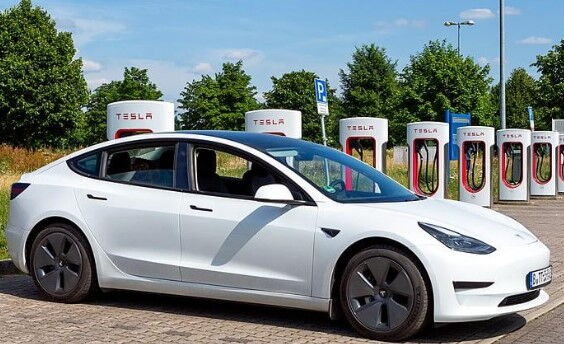
The technical advantages of NACS lie not only in its integrated design but also in its high-power charging capability, plug-and-charge functionality, and intelligent charging management. These advantages collectively constitute NACS's strong competitiveness in the field of electric vehicle charging.
The core advantage of NACS lies in its integrated design. Compared with the traditional CCS charging standard, NACS integrates AC (alternating current) and DC (direct current) charging pins into a single unit. This design not only makes the plug lighter and more compact but also significantly reduces manufacturing and construction costs. In contrast, CCS adds two DC fast-charging pins to the original AC slow-charging J1772 plug, resulting in a larger plug and thicker cables, which makes it difficult to plug and unplug for many drivers.
NACS supports two DC configurations: one supports up to 500 volts (V), and the other supports up to 1000 V. The higher voltage version is backward compatible with the lower voltage version. Tesla has reported that the connector can operate continuously at currents up to 900 amperes (A). For DC fast charging, the current fourth-generation (V4) Tesla Supercharger delivers up to 325 kilowatts (kW) of power, although this is not the maximum capacity of the NACS connector. For AC charging, the NACS system can supply up to 80 A at 277 V, producing 22.16 kW. In typical configurations, NACS provides up to 48 A at 240 V (standard North American split-phase residential voltage), producing 11.5 kW.
Another significant advantage of NACS is its plug-and-charge functionality. This feature greatly simplifies the charging process. Previously, EV users often needed to download multiple apps and scan QR codes to pay for charging, which was cumbersome and inconvenient. With NACS's plug-and-charge functionality, users only need to insert the charging plug into the vehicle to automatically start charging, without any additional steps. Currently, only a few CCS vehicles support this function.
After understanding NACS's technical advantages, it is inevitable to compare it with the main competitor in the market—CCS (Combined Charging System). This comparison not only helps to comprehensively understand NACS's market competitiveness but also provides a clear perspective on the future development trends of electric vehicle charging standards.
The NACS plug design is very lightweight, and a small plug can meet both slow and fast charging needs, while CCS and CHAdeMO plugs are large. The NACS connector uses a five-pin layout: two main pins are used for AC charging and DC fast charging—DC+/L1 provides the positive pole of the DC voltage, or in AC mode serves as L1 for split-phase connections and as the single-phase live line; DC−/L2 provides the negative pole of the DC voltage, or in AC mode serves as L2 for split-phase connections and as the neutral line for single-phase connections. G (ground) connects the vehicle chassis and also serves as a reference for CP and PP signals and for measuring electrical insulation. CP (control pilot) is a digital communication path used to exchange charging status and current information according to IEC 61851. During DC charging, power line communication is superimposed on the control pilot. PP (proximity pilot) transmits a low-voltage signal to detect the connector status. When the release button on the plug is pressed, the switch in the proximity pilot circuit is disconnected, interrupting the current. The AC pin layout matches the SAE J1772 connector and can use a simple pass-through adapter.
Tesla's extensive charging network provides great convenience for owners and vehicles. By the end of 2024, the number of NACS outlets in North America exceeded the total of all CCS networks by more than 60%. Tesla's Supercharger network not only has broad coverage but also higher reliability, providing a better user experience. In contrast, CCS network construction is relatively scattered and lacks unified management and optimization.
Regarding charging speed, NACS also has obvious advantages. Tesla's fourth-generation (V4) Superchargers can deliver up to 325 kW, giving NACS far superior fast-charging capability compared to CCS. For North American users who only want slow charging, the J1772 standard is used. All Teslas are equipped with a simple adapter to enable J1772 charging.
After in-depth exploration of NACS's technical advantages and detailed comparison with CCS, it is clear that these technical features and advantages are translating into NACS's significant market position. Next, let's focus on NACS's market position to see how it stands out in the competitive EV charging standard market.
With SAE standardization endorsement and U.S. federal policy support, NACS is no longer Tesla's proprietary technology but has been formally accepted as an industry standard. This shift is a major blow to other charging interface standards in the North American market (mainly CCS). Although currently only Tesla, Ford, and General Motors have joined the NACS interface standard, according to 2022 U.S. EV sales and charging interface market data, a few companies occupy the majority of the market: the EV sales of these three companies account for over 50% of U.S. EV sales, and Tesla's NACS fast charging accounts for nearly 60% of the U.S. market.
The promotion of NACS not only improves user experience but also promotes the development of the entire EV industry. Tesla owners typically install NACS chargers at home, which are lower in price. For some public locations, such as hotels, Tesla distributes NACS slow chargers; if NACS becomes the standard, existing J1772 chargers will be equipped with adapters to convert to NACS.
- Global Impact: NACS's success is not limited to North America; it may also have a profound impact on global EV charging standards. Currently, there are five major charging interface standards worldwide: North American CCS, European CCS2, China GB/T, Japanese CHAdeMO, and Tesla's proprietary NACS. Among these, only Tesla integrates AC and DC together, while other manufacturers use separate AC and DC charging interfaces. NACS's integrated design and high-power charging capability make it highly competitive globally.
- Technological Innovation and Expansion: Tesla will continue to innovate and expand in charging technology. In the future, NACS is expected to support higher voltages and currents, further improving charging speed. Additionally, Tesla plans to continuously optimize the charging experience and improve charger reliability and efficiency through software updates and hardware upgrades.
- Policy Support and Collaboration: With increasing government support for EVs, NACS is expected to receive more policy support and industry collaboration. Tesla has already established partnerships with multiple automakers and energy companies to promote NACS adoption. In the future, NACS is expected to become a universal standard for global EV charging.
Overall, NACS, with its integrated design, high-power charging capability, and plug-and-charge functionality, has established a leading position in the North American market and is becoming an important force in promoting EV industry standardization. With continued technological innovation, policy support, and cross-manufacturer collaboration, NACS is expected to achieve wider global adoption, improving charging convenience and efficiency, and further promoting EV popularization and sustainable development. In the future, NACS may not only be Tesla's proprietary advantage but also a universal standard in the global EV charging field.