CCS2 to GB/T DC Adapter: Convenient Charging for Chinese EVs
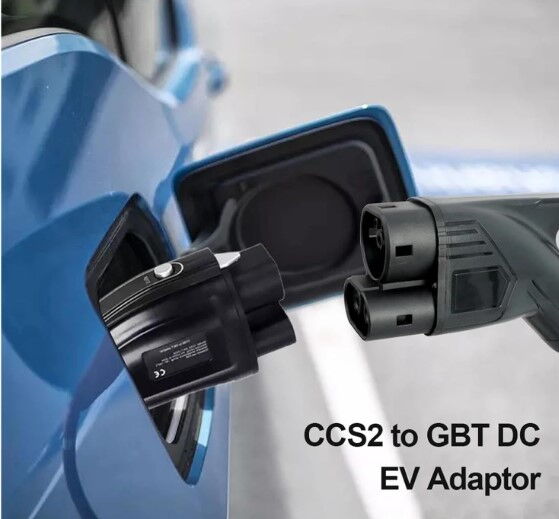
With the global electric vehicle market booming, more and more Chinese EV owners are turning their attention to overseas travel. However, the differences in charging standards adopted by various countries and regions pose significant challenges for Chinese EV owners charging abroad. Today, we will take an in-depth look at the CCS2 to GB/T DC fast charging adapter, specifically designed for Chinese electric vehicles equipped with GB/T DC charging ports, and see how it facilitates overseas charging for Chinese EV owners.
With the rapid development of China's electric vehicle industry, an increasing number of Chinese EV brands have entered international markets. However, charging standards in different countries and regions are not uniform, bringing considerable inconvenience to Chinese EV owners traveling abroad. In China, GB/T is the mainstream DC charging standard, whereas in many regions outside China, such as Europe, Australia, parts of South America, and the UAE, the CCS2 (Combined Charging System Type 2) DC fast charging standard is widely used. This makes it impossible for Chinese EV owners to directly use local charging facilities for fast charging in these regions.
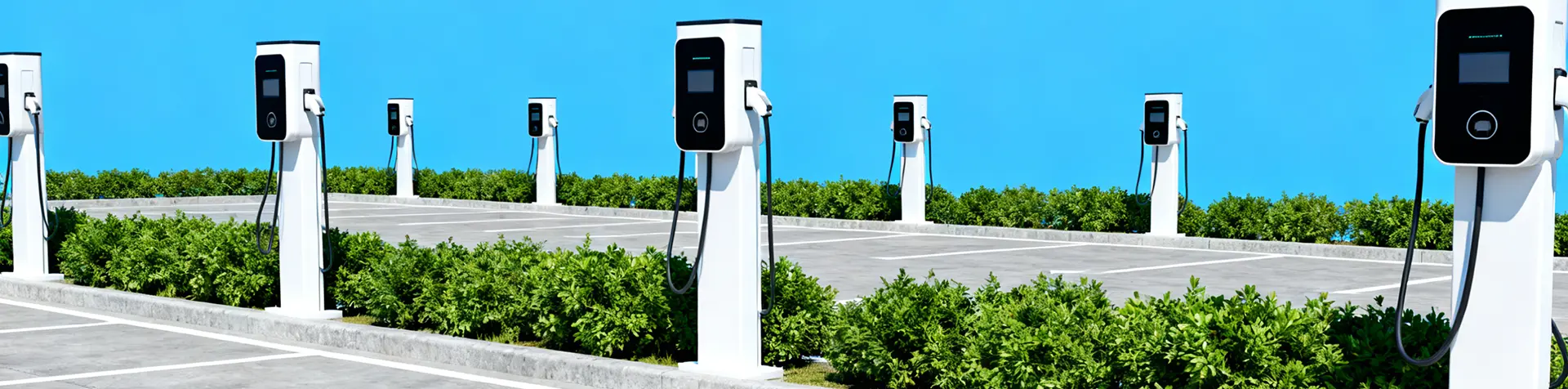
Taking Europe as an example, the CCS2 charging standard is highly prevalent. Many highway service areas, urban public parking lots, and shopping centers are equipped with numerous CCS2 DC fast charging stations. Without a CCS2 to GB/T DC fast charging adapter, Chinese EV owners traveling in Europe would have to spend a long time searching for charging stations compatible with GB/T interfaces, which would greatly reduce travel convenience and efficiency. Similarly, in the UAE and other Middle Eastern regions, CCS2 charging facilities also dominate. For Chinese EV owners intending to travel for business or tourism in these areas, the presence of an adapter becomes especially important.
In addition, for some expatriates, diplomats, and business travelers working in China, the EVs they drive may use the CCS2 charging standard. In mainland China, most public DC fast chargers adopt the GB/T standard, and without an adapter, these EVs would not be able to charge normally. Therefore, the CCS2 to GB/T DC fast charging adapter not only provides convenience for Chinese EV owners traveling abroad but also offers a charging solution for foreign EV owners in China.
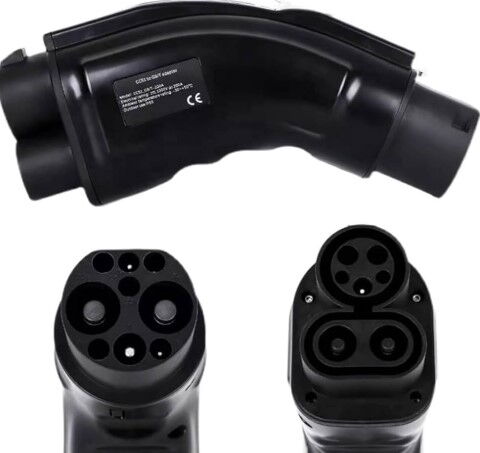
The core function of the CCS2 to GB/T DC fast charging adapter is to achieve the electrical and communication protocol conversion between two different charging standards. Although both CCS2 and GB/T support high-power DC fast charging, there are significant differences in their physical connectors and communication protocols.
The CCS2 charging system uses a combined connector for AC and DC charging and communicates via PLC (Power Line Communication) signals. This design allows the CCS2 charging system to integrate multiple functions within a single connector, improving charging convenience and compatibility. In contrast, the GB/T charging system uses separate connectors for AC and DC charging, with the DC protocol communicating via CAN (Controller Area Network) signals. Although this design increases the number of connectors to some extent, it contributes to improved safety and stability during charging.
Inside the adapter are a series of electronic components responsible for managing the conversion process between the two standards. When the adapter is connected to a CCS2 charging station and a GB/T interface EV, it automatically identifies and converts the electrical parameters and communication protocols between the two standards, ensuring a safe and efficient charging process. For example, the adapter converts the PLC communication signals from the CCS2 charging station into CAN signals that the GB/T EV can recognize, allowing the EV and charging station to complete the handshake operation and start the charging process.
In some cases, the adapter may also be equipped with a small built-in battery. This battery provides stable power during the conversion process, ensuring smooth operation. Typically, the built-in battery is charged via the EV's auxiliary power to ensure it can function properly when needed.
- Wide applicability: This adapter is specifically designed for various Chinese EVs using the GB/T charging standard and can meet the charging needs of different brands and models. Whether it is popular models sold in the Chinese market such as BYD, Volkswagen ID.4, and ID.6, or other brands like Geely (including Zeekr), they can all achieve fast charging at CCS2 stations using this adapter. This provides great convenience for Chinese EV owners traveling overseas, removing concerns about vehicle charging.
- High-efficiency fast charging capability: The CCS2 to GB/T DC fast charging adapter has a maximum output power of up to 300 kW DC. This means, under ideal conditions, it can provide up to 300 kW (300 A at 1000 V DC) power to the EV. Of course, the actual charging power is limited by the vehicle's charging capabilities and the charger's compatibility. For example, if your car only supports 150 kW charging, even with this adapter, the power will not exceed 150 kW. Nonetheless, even in such cases, the adapter ensures a safe and efficient charging process, fully leveraging the capabilities of both the EV and charger.
- Safe and reliable charging: The adapter is designed and manufactured in strict accordance with relevant safety standards and specifications. It effectively converts communication protocols between the vehicle and charger, ensuring accurate data transmission during charging. The electronic components inside the adapter are carefully designed and rigorously tested to withstand high voltage and large currents, ensuring a safe and stable charging process. Moreover, high-quality adapters may feature overheat protection, short-circuit protection, and other safety functions, further enhancing charging safety.
Using the CCS2 to GB/T DC fast charging adapter is relatively simple but requires attention to details to ensure smooth operation.
- Preparation: Before starting charging, ensure your EV has a GB/T DC charging port and that the adapter's rated power matches the charger's output. Additionally, confirm that the adapter supports protocol conversion, not just mechanical connection. If the voltage and current parameters of the EV and charger do not match, it may result in limited charging power or failure to charge.
- Connecting the adapter: Insert the CCS2 plug from the charger into the adapter's CCS2 end and ensure it is locked in place. Then firmly insert the adapter's GB/T end into the EV's charging port, making sure the locking mechanism engages. During connection, pay attention to the alignment and insertion force to prevent charging failure or safety hazards.
- Starting the charge: After connecting the adapter, start charging using the charger's screen, RFID card, or application. The adapter automatically handles the communication protocol conversion between the CCS2 charger and the GB/T EV, completing the handshake. Charging status is displayed on both the charger screen and the EV dashboard. If the handshake fails, stop charging and check the connection, ensuring plugs and sockets are properly and securely connected.
- Ending the charge: After charging is complete, end the session via the charger's screen or app. Do not disconnect the adapter from the EV prematurely to avoid safety risks. Wait until the charger fully powers down, then carefully disconnect the adapter and store it for future use.
- Adapter power limit: Although the CCS2 to GB/T DC fast charging adapter has a maximum output of 300 kW, not all adapters reach this power. Some may be limited to 60–120 kW. When selecting an adapter, choose one that matches your EV's charging requirements and the charger's power. For frequent high-speed charging, a high-power adapter is recommended.
- Adapter cooling method: For ultra-fast liquid-cooled GB/T chargers (600A+), due to special cooling and safety requirements, they often cannot be used with the CCS2 standard. Choose an adapter compatible with your charger's cooling system.
- Adapter quality: Adapter quality directly affects charging safety and reliability. Low-cost adapters may overheat or fail handshake operations and may even damage your EV or charger. High-quality adapters typically feature better heat dissipation, stable electronic components, and comprehensive safety protection, ensuring a safer and more reliable charging experience.
- Adapter directionality: Adapters are usually unidirectional, i.e., GB/T → CCS2 or CCS2 → GB/T. Choose the direction based on actual needs. For charging a GB/T EV outside China, choose a CCS2 → GB/T adapter; for charging a CCS2 EV in China, choose GB/T → CCS2. Since GB/T → CCS2 adapters are relatively rare, careful consideration is needed.
To better understand the practical use of the CCS2 to GB/T DC fast charging adapter, consider a real case.
Xiao Li, a Chinese EV enthusiast, purchased a BYD EV and planned a long trip in Europe. Before departure, he learned that European charging standards are mainly CCS2, while his BYD uses GB/T. To charge smoothly in Europe, he purchased a CCS2 to GB/T DC fast charging adapter.
During his European trip, Xiao Li found the adapter extremely convenient. Whether at highway service areas or urban public parking lots, he could easily locate CCS2 charging stations and charge his BYD EV quickly. On one occasion, the charging power reached 150 kW, higher than what he typically experienced with GB/T stations in China, leaving him highly impressed.
However, he also encountered issues. Once, at a remote CCS2 charging station, the adapter failed to handshake. After checking, he found the plug connection was loose. After reconnecting and securing the plug, charging started successfully. This experience made him realize the importance of adapter quality and proper usage for successful charging.
Through this trip, Xiao Li deeply understood the importance of the CCS2 to GB/T DC fast charging adapter. It not only facilitated charging in Europe but also improved travel efficiency and comfort. He also advised other Chinese EV owners to pay attention to adapter quality and carefully follow usage instructions to ensure smooth charging.
In conclusion, the CCS2 to GB/T DC fast charging adapter is a vital tool for Chinese EV owners' overseas charging. It not only meets their charging needs abroad but also improves travel efficiency and comfort. When selecting and using the CCS2 to GB/T adapter, Chinese EV owners should pay attention to power limits, cooling methods, quality, and directionality to ensure safe and efficient charging. They can also refer to real-world cases to understand practical performance, aiding better selection and use. Finally, with the unification of charging standards and advancements in adapter technology, overseas charging for Chinese EVs will become increasingly convenient and efficient. We look forward to a future of easier, faster, and greener EV travel.