Guide to Single-Phase vs. Three-Phase EV Charging

As electric vehicles (EVs) continue to gain widespread adoption, more vehicle owners are paying close attention to ev charging options. Among the various charging solutions available today, single-phase charging and three-phase charging are the two most common, and often most misunderstood, AC charging methods.
These charging approaches differ significantly in terms of power supply configuration, charging capability, installation cost, and future scalability. For both residential users and public charging operators, selecting the appropriate electrical supply system is a critical part of building an efficient charging infrastructure.
This article provides a detailed comparison of single-phase and three-phase EV charging from multiple perspectives, helping readers choose the most suitable solution based on their specific requirements.
To understand the differences between single-phase and three-phase charging, it is important to first examine how these power systems operate and what characteristics define them. Single-phase electricity is commonly used in residential applications, while three-phase electricity is more prevalent in industrial and commercial environments.
These two power supply methods differ fundamentally in waveform characteristics, power transmission capacity, and typical applications.

Single-phase power is the most common electrical supply method used in residential buildings. It consists of one live conductor and one neutral conductor, delivering electricity through a single alternating current waveform.
Because power is supplied through only one voltage wave, the voltage continuously rises and falls throughout each AC cycle. As a result, the stability of power delivery is relatively limited compared with three-phase systems.
In the electric vehicle charging sector, single-phase charging is generally sufficient for everyday residential charging needs, particularly when vehicles remain parked overnight for extended periods.
Most single-phase AC chargers provide output power of approximately 7.4 kW. For example, an EV equipped with a 50 kWh battery pack typically requires around seven hours to charge from empty to full using a 7.4 kW single-phase charger. This charging speed is more than adequate for most home charging applications.
Three-phase power uses three separate alternating current waveforms, each offset by 120 degrees. At any given moment, at least one phase is close to its peak output, resulting in a smoother and more continuous power supply.
Compared with single-phase electricity, three-phase systems not only provide greater stability but also enable significantly higher power transmission.
When used for EV charging, three-phase AC charging systems commonly deliver charging power ranging from 11 kW to 22 kW. Using the same 50 kWh battery example, a three-phase charger can complete a full charge in approximately two to three hours, dramatically reducing charging time.
For this reason, three-phase charging is widely used in commercial parking facilities, public charging stations, fleet operations, and residential applications where faster charging is desired.
The fundamental differences between single-phase and three-phase charging can be summarized in three main areas:
Power Supply Method
Single-phase power relies on a single AC waveform.
Three-phase power utilizes three coordinated AC phases.
Power Delivery Capability
Single-phase charging typically provides around 7.4 kW.
Three-phase charging commonly delivers between 11 kW and 22 kW.
Application Scenarios
Single-phase charging is ideal for everyday residential charging.
Three-phase charging is better suited for applications requiring faster charging speeds and higher energy throughput.
When selecting a charging solution, charging speed is often the first factor users consider. The substantial difference in power output between single-phase and three-phase charging directly affects the time required to recharge an EV battery.
Charging efficiency and battery health are also important considerations.
A typical single-phase AC charger can provide up to approximately 7.4 kW of charging power. As a general estimate, this allows the vehicle to gain around 50 kilometers (31 miles) of driving range per hour of charging.
For most drivers who travel between 30 and 50 kilometers daily, charging overnight for eight to ten hours is sufficient to replenish the battery. Consequently, single-phase charging comfortably satisfies the needs of most residential EV users.
It is worth noting that a 7.4 kW charger may consume roughly half of a home's available electrical capacity. However, modern smart chargers commonly feature dynamic load management systems.
These systems continuously monitor household electricity consumption and automatically reduce charging power whenever high-demand appliances such as ovens, water heaters, air conditioners, or washing machines are operating simultaneously. This prevents circuit overload and improves overall electrical safety.
By utilizing three power lines simultaneously, three-phase AC chargers can achieve charging outputs of up to 22 kW.
At this power level, an EV may gain approximately 120 kilometers (75 miles) of driving range per hour, significantly outperforming single-phase charging systems.
For vehicles equipped with large battery packs, commercial fleets, ride-sharing services, or users who charge frequently, three-phase charging can substantially improve vehicle availability and operational efficiency.
However, the vehicle's onboard charger can limit actual charging speed. Some earlier EV models support only 3.6 kW AC charging. Even if a 22 kW three-phase charger is installed, the vehicle will not be able to utilize the additional available power.
Therefore, when selecting charging equipment, it is essential to consider not only the electrical supply available at the property but also the vehicle's maximum AC charging capability.
From an energy efficiency and power quality perspective, three-phase electricity provides smoother and more balanced power delivery, minimizing voltage fluctuations during charging.
This stable charging environment improves energy utilization efficiency and helps reduce heat generation within the battery pack. Lower charging temperatures contribute to improved long-term battery performance and service life.
As a result, an increasing number of modern EVs are being designed to support higher-power three-phase AC charging.
Beyond charging speed, installation cost is another critical factor influencing purchasing decisions.
Single-phase and three-phase charging systems differ significantly in equipment costs, installation complexity, and infrastructure requirements. Regional power grid characteristics further affect the practicality of each solution.
Single-phase charging systems offer clear advantages from an installation standpoint.
Because most residential properties already have single-phase electrical service, installation is typically straightforward and relatively inexpensive. In many cases, homeowners need only install a charger and appropriate electrical protection devices.
In countries such as Australia, single-phase residential electrical systems commonly provide a maximum capacity of approximately 14.5 to 15 kW. This means the total combined power consumption of all household appliances must remain within this limit.
For most homes, a 15 kW supply is more than sufficient. Typical appliance power consumption includes:
- Refrigerator: 0.1–0.4 kW
- Microwave oven: 0.6–1.2 kW
- Electric kettle: 1.5–3 kW
- Washing machine: 0.3–1.5 kW
Even when several appliances operate simultaneously, total demand usually remains well below the system's maximum capacity.
Three-phase charging systems generally require more advanced electrical infrastructure.
If a property does not already have a three-phase connection, utility upgrades and electrical distribution modifications may be necessary, increasing both installation costs and project complexity.
A three-phase supply delivers power through three live conductors operating 120 degrees apart. While the power available from each phase is similar to a single-phase circuit, the combined output can exceed 30 kW or more.
For properties already equipped with three-phase service, however, EV charging systems can fully utilize this additional capacity.
Three-phase electricity is commonly found in industrial facilities, commercial buildings, workshops, large machinery installations, electric motor applications, swimming pool systems, and certain high-end residential developments.
Electrical infrastructure varies considerably across different countries and regions, influencing charging choices.
North America: Most homes use 120V–240V single-phase electrical systems. Consequently, residential EV charging is predominantly single-phase, while three-phase power is generally limited to commercial and industrial settings.
Europe: Europe widely employs both 230V single-phase and 400V three-phase electrical systems. Many homes already have access to three-phase service, making residential three-phase charging significantly more common.
China: Urban areas in China benefit from extensive three-phase electrical infrastructure. As a result, three-phase charging is widely used in both commercial and public charging applications.
Australia: Although most homes currently utilize single-phase electricity, an increasing number of new residential developments are being equipped with three-phase service to support EV charging and renewable energy technologies.
Installation expenses represent only the initial investment. Long-term operating costs are equally important when evaluating charging solutions.
Single-phase charging equipment is generally less expensive to purchase and install.
The simpler electrical design requires fewer components and less complex protection systems, resulting in lower overall investment costs.
For users with limited budgets or relatively low daily driving requirements, single-phase charging often provides the most economical solution.
Three-phase chargers, on the other hand, must handle higher power levels and more sophisticated power management functions. Consequently, both equipment and installation costs are typically higher.
If utility upgrades are necessary to obtain three-phase service, those additional expenses must also be considered.
Although three-phase charging involves higher upfront costs, it significantly reduces charging times and improves vehicle utilization.
For commercial fleets, high-mileage drivers, and owners of large-battery EVs, the long-term value can outweigh the higher initial investment. Faster charging means vehicles can return to service more quickly, improving operational productivity.
For residential users who primarily charge overnight, however, the difference in charging time often has little impact on daily life. In these situations, single-phase charging frequently offers superior overall value.
Modern smart chargers support scheduled charging functions, allowing users to charge during off-peak electricity pricing periods.
This capability can significantly reduce electricity costs while also helping balance grid demand.
Both single-phase and three-phase smart chargers can provide these benefits. Additionally, dynamic load management systems prevent household electrical overloads, reducing the risk of tripped breakers and costly repairs.
Different countries and regions use different charging connectors and technical standards, which directly affect equipment compatibility and user options.
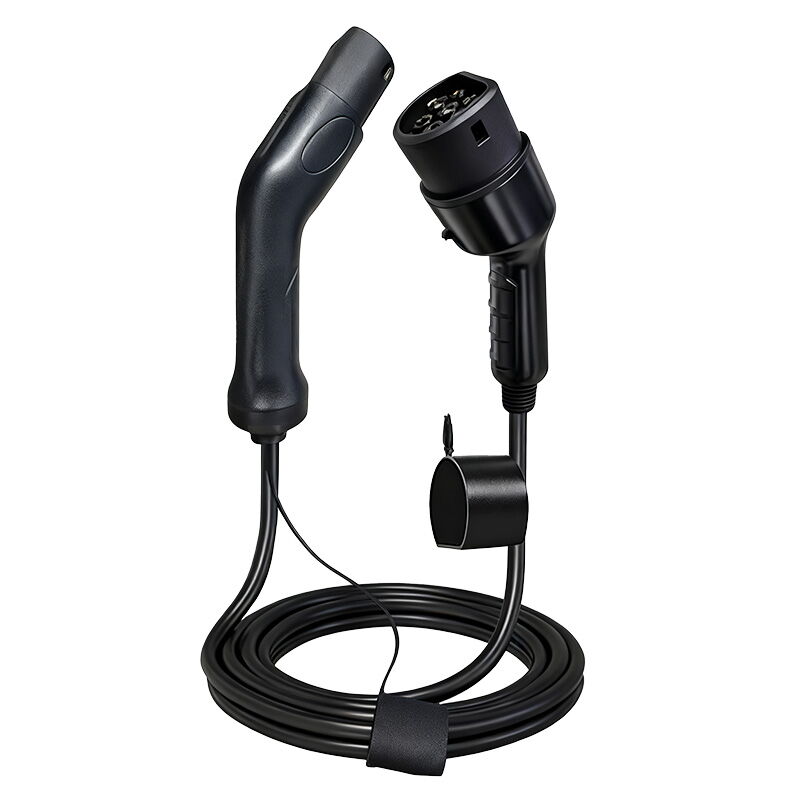
Europe primarily uses the Type 2 (Mennekes) connector for AC charging.
One of its major advantages is support for both single-phase and three-phase charging, providing excellent flexibility and compatibility for EV owners.
North America mainly uses the Type 1 (J1772) connector for AC charging and the CCS standard for DC fast charging.
Because residential power systems are predominantly single-phase, Type 1 connectors are designed primarily for single-phase AC charging.
For higher-power charging needs, DC fast charging serves as the primary solution.
China utilizes the GB/T charging standard, supporting both single-phase and three-phase AC charging as well as DC fast charging.
This versatile design accommodates a wide range of charging scenarios, from residential overnight charging to high-power public charging stations.
Japan primarily uses the CHAdeMO standard for DC fast charging while continuing to employ the Type 1 connector for AC charging.
After understanding the principles, performance characteristics, costs, and standards associated with single-phase and three-phase charging, the final step is selecting the most appropriate solution.
For most homeowners, single-phase charging is sufficient if:
The vehicle is primarily charged overnight.
Daily driving distances are moderate.
Installation costs are a concern.
A 7.4 kW smart charger paired with a standard single-phase electrical supply can satisfy the daily charging requirements of the vast majority of EV owners.
However, if faster charging is desired, the vehicle has a large battery pack, or the property already has three-phase power available, a three-phase charging system may be a more efficient and future-proof investment.
Three-phase charging is especially advantageous when:
Large-capacity battery vehicles are used.
Rapid recharging is important.
Multiple EVs require charging.
Household electricity demand is already relatively high.
In public charging environments, charging speed and vehicle turnover are critical.
As a result, three-phase charging has become the preferred solution for commercial parking facilities, workplaces, fleet depots, and public charging stations.
Combined with high-power DC fast charging infrastructure, three-phase charging delivers a faster, more reliable, and more efficient charging experience capable of supporting high traffic volumes.
Single-phase and three-phase EV charging systems each offer distinct advantages and are suited to different applications.
Single-phase charging is easy to install, cost-effective, and ideal for most residential users who primarily charge overnight. Three-phase charging provides higher power, faster charging speeds, and greater efficiency, making it well suited for demanding users and public charging environments.
When choosing a home EV charging solution, the goal should not simply be to pursue the highest possible charging power. Instead, users should carefully evaluate their vehicle's charging capabilities, household electrical capacity, daily driving requirements, budget, and future expansion plans.
Whether using single-phase or three-phase power, pairing the electrical system with a suitable smart charging solution can deliver a safe, efficient, and reliable EV charging experience. As electric vehicle technology continues to evolve and charging infrastructure expands, consumers will enjoy an increasingly diverse range of convenient charging options in the years ahead.