Tethered vs. Untethered EV Chargers: How to Choose

When considering the installation of charging equipment for an electric vehicle, the most fundamental difference between tethered EV chargers and untethered EV chargers lies in the charging cable configuration. A tethered EV charger has a charging cable permanently attached to the charging unit, allowing users to plug in and charge at any time without additional preparation. An untethered EV charger, by contrast, does not include a permanently connected cable. Users must use their own charging cable and connect it separately to both the charger and the vehicle during charging. Both types are capable of delivering stable and reliable charging for electric vehicles, but they differ in terms of usability, flexibility, and practical application. This article explores the basic concepts, advantages and disadvantages, technical considerations, and practical selection advice for both types of EV chargers, helping users make an informed decision based on their actual needs.
Before choosing between tethered and untethered EV chargers, it is important to clearly understand their definitions, structural differences, and how each type performs the basic charging function. This forms the foundation for meaningful comparison and selection.

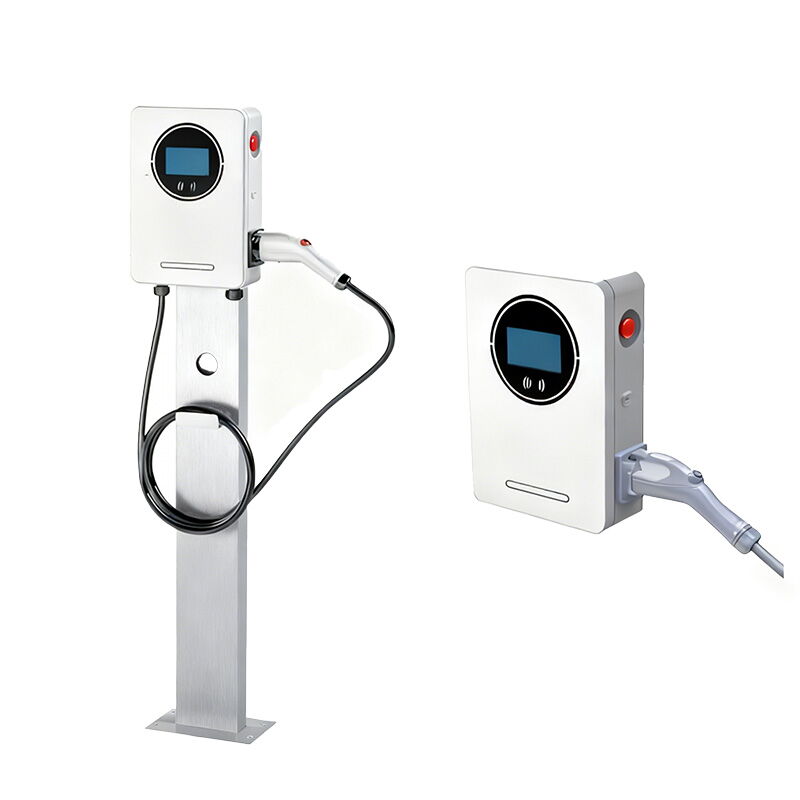
A tethered EV charger is a charging device equipped with a permanently attached charging cable. Its operation is similar to the fuel nozzle at a traditional gas station, where the charging cable always remains connected to the charging unit, allowing users to charge the vehicle directly without preparing an additional cable. This design permanently integrates the charging connector with the charging equipment, creating a complete charging system.
In the UK and most European markets, modern residential AC chargers commonly use the Type 2 connector standard, which is also compatible with most modern electric vehicles, including models such as the Skywell BE11. The defining characteristic of a tethered charger is its integrated structure. Users simply remove the charging connector from the unit, plug it into the vehicle’s charging port, and the connection process is complete.
An untethered EV charger uses a socket-based design and does not include a permanently attached charging cable. Users must provide and connect their own charging cable when charging the vehicle. This design is similar to many public charging stations, where the charging unit only provides the power outlet interface, while the charging cable remains a separate accessory supplied by the user.
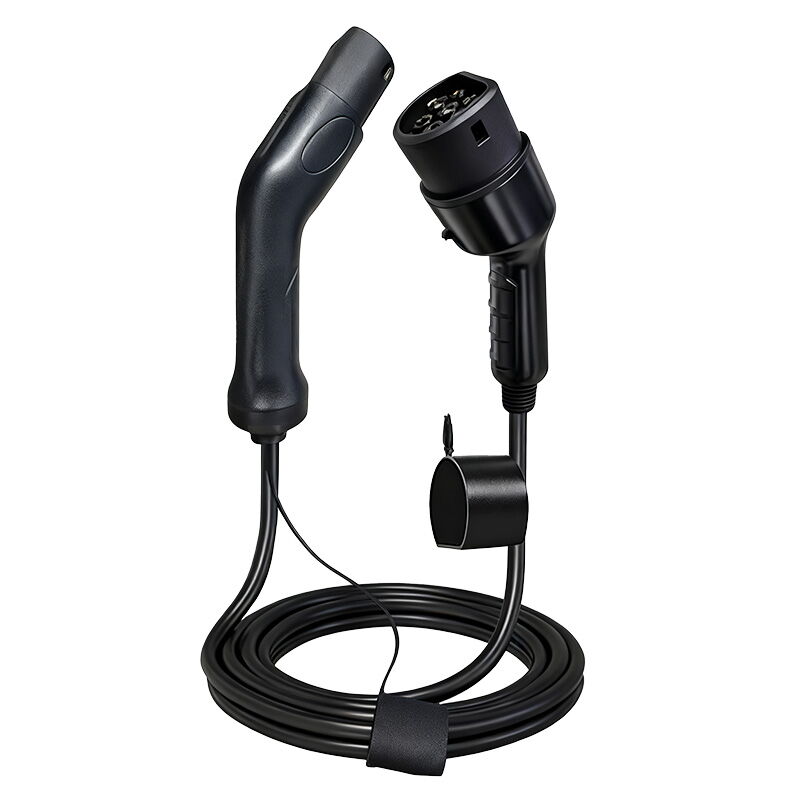
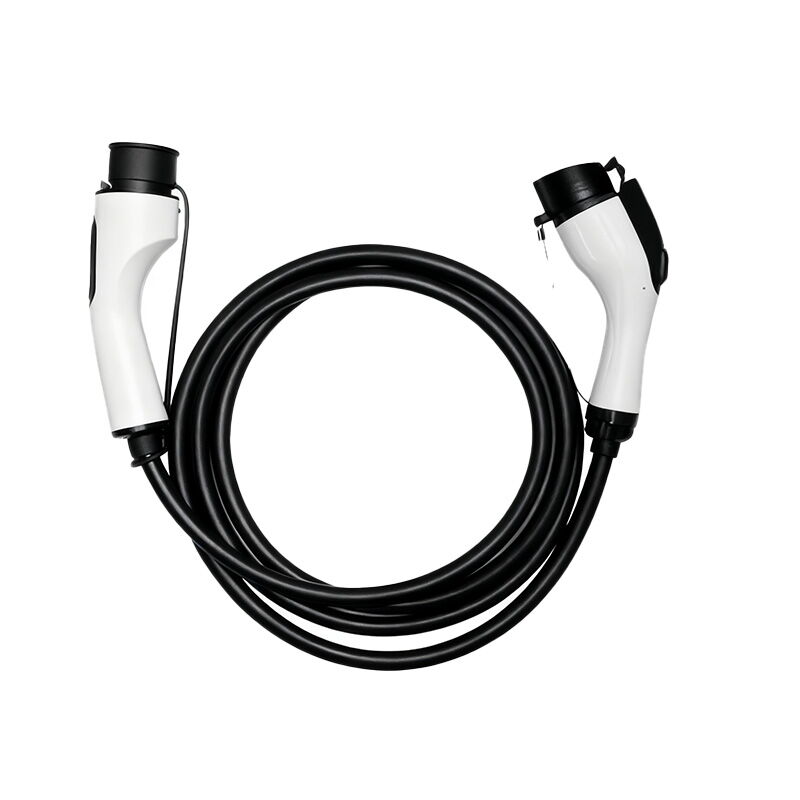
During charging, users connect one end of the cable to the charger socket and the other end to the vehicle charging port. Since there is no permanently hanging cable, the wall-mounted appearance is usually cleaner and more compact, and compatibility with different vehicle types is often easier to maintain. Users can also choose charging cables of different lengths and specifications according to their parking environment and usage habits.
Regardless of whether the charger is tethered or untethered, the basic working principle remains the same. Both deliver electrical energy from the household power supply system to the EV battery. The charger converts alternating current into a form suitable for the vehicle battery, transmitting power through the charging cable while the vehicle’s onboard charging management system controls the entire charging process.
For example, when a vehicle is connected to a 7kW home AC charging unit overnight, the battery gradually restores driving range to support daily commuting or long-distance travel. Charging speed is not determined by whether the cable is tethered or untethered. Instead, it mainly depends on the charger’s power output and the capacity of the household electrical infrastructure.
The core value of a tethered EV charger lies in its convenient “plug-and-charge” experience. However, while this integrated design improves ease of use, it may also involve higher costs and reduced flexibility, which should be evaluated objectively.
The greatest advantage of a tethered EV charger is convenience. Since the charging cable is permanently attached to the charger, users simply pick up the connector and plug it into the vehicle charging port. There is no need to remove the cable from the trunk or storage area every time charging is required.
This plug-and-charge experience is especially suitable for high-frequency residential charging scenarios. After long commutes or busy workdays, users can begin charging immediately without additional preparation, significantly improving daily convenience and efficiency. For users who charge their vehicles regularly, reducing operational steps can make long-term usage considerably easier and more comfortable.
Because the charging cable is included as part of the equipment, users do not need to purchase a separate cable. The fixed structure also reduces the risk of cable loss or theft. The cable remains close to the charging unit and is less likely to be misplaced, damaged, or forgotten.
The charging process becomes more stable and reliable, as users do not need to worry about carrying the correct charging cable or searching for compatible accessories. For users who mainly charge in private garages or fixed parking spaces, this stability can provide a more reassuring charging experience.
Despite their convenience, tethered chargers also have several limitations. Because the charger includes a permanently attached cable, the initial purchase cost is generally higher than that of untethered models.
The cable length is fixed, meaning users can only charge within the original cable range. In more complex parking environments, or when the vehicle charging port position does not align well with the cable direction, charging may become inconvenient and may even require repositioning the vehicle.
If the household parking arrangement changes in the future, or if the user purchases a vehicle with a different connector requirement, the permanently attached cable may reduce flexibility and could potentially require replacing the entire charging unit. Additionally, continuously exposed charging cables may negatively affect the appearance and tidiness of garages or parking areas.
Unlike the integrated concept of tethered chargers, untethered EV chargers use a socket-based design where the cable functions as a separate accessory. This separated structure provides greater adaptability but also requires more user involvement during daily operation.
Untethered EV chargers do not include a permanently attached cable, allowing users to select charging cables of different lengths and specifications according to their needs. This provides significant flexibility advantages.
For households with multiple electric vehicles, different parking arrangements, or future plans to upgrade vehicles, untethered chargers are often better suited to changing requirements. Users can select cable lengths based on actual parking distances and can change charging cables according to different connector standards without replacing the entire charging unit.
Because the charger itself does not include a cable, untethered EV chargers are usually less expensive, reducing the overall installation cost of a home charging system to some extent.
Without a permanently hanging cable, the wall-mounted appearance is generally cleaner and more compact, helping maintain a modern and organized garage or parking environment. Charging cables can be stored separately when not in use, allowing the wall-mounted charger to maintain a minimalist appearance. This feature is attractive for users who prioritize neat and tidy space design.
However, untethered chargers involve more operational steps during daily use. Each time charging is required, users must retrieve the charging cable from the vehicle or storage area and connect it separately to both the charger and the vehicle.
Although this process usually takes only a few minutes, long-term convenience may be reduced for users who charge frequently. In addition, users must purchase a suitable charging cable independently, such as a Type 2 charging cable, and high-quality cables may involve additional expense.
When the cable is not in use, users must also consider waterproofing, dust protection, and secure storage to prevent cable aging or damage. If the cable is forgotten, lost, or stored improperly, the charging experience may also be affected.
Beyond the visible difference of whether the charging cable is fixed, several deeper technical factors ultimately determine the charging experience. Charging power, connector compatibility, and installation environment often play a more important role than the tethered-versus-untethered choice itself.
From a technical perspective, charging speed is not determined by whether the charger is tethered or untethered. Instead, it mainly depends on the charger’s power output and the household electrical infrastructure.
Mainstream residential EV chargers are typically divided into Level 1 and Level 2 charging systems. Level 1 chargers usually operate at 120V and are suitable for standard slow residential charging. Level 2 chargers operate at 240V and provide significantly faster charging speeds, making them more suitable for high-frequency daily charging or commercial installations.
Therefore, when selecting a charger, users should focus more on charging power, installation conditions, and the vehicle’s charging capabilities rather than simply choosing between tethered and untethered designs.
Compatibility is another important factor when selecting an EV charger. Different electric vehicle models may use different connector standards, so users should confirm compatibility between the charger connector and the vehicle charging port before purchasing.
Most modern electric vehicles widely support mainstream standards such as Type 2 connectors, meaning that both tethered and untethered chargers can generally meet the requirements of modern EVs. However, confirming compatibility in advance remains essential to avoid future installation or operational issues.
With tethered chargers, the connector is fixed, so compatibility with future vehicles must be considered carefully. With untethered chargers, users can simply replace the charging cable to accommodate different connector standards.
The installation environment directly affects charging convenience. Tethered chargers require consideration of cable hanging positions and whether the cable length can comfortably reach the vehicle charging port. Permanently exposed cables also require sufficient surrounding space.
Untethered chargers, meanwhile, require nearby storage space for the charging cable when it is not in use. Users should evaluate their garage or parking layout carefully to determine which charger type better suits the available space.
If the parking position is fixed and sufficient space is available, the convenience of a tethered charger becomes more noticeable. If space is limited or parking positions frequently change, the flexibility of an untethered charger may offer greater advantages.
After understanding the characteristics and technical considerations of both charger types, the final decision should be based on the user’s actual usage habits and long-term plans. Factors such as charging frequency, parking conditions, and future vehicle changes all influence the most suitable solution.
Tethered EV chargers are ideal for users who prioritize convenience, charge frequently, and prefer minimizing operational steps. If charging mainly takes place in a private garage or fixed parking space, and daily EV usage follows a regular routine, a tethered charger is often the more suitable option.
For users who do not want to purchase, store, or repeatedly handle charging cables, the integrated tethered design provides a more effortless long-term charging experience. If the current vehicle connector matches the charger and there are no short-term plans to change vehicles or parking arrangements, a tethered charger is generally the more practical solution.
Untethered EV chargers are more suitable for users who value flexibility, compatibility, and a cleaner appearance. If multiple electric vehicles with different connector types are used, or if future vehicle replacement is likely, an untethered charger allows compatibility adjustments simply by changing the charging cable rather than replacing the entire charger.
Users who prioritize a clean garage appearance, frequently change parking positions, or require different cable lengths may also benefit more from the untethered design. Additionally, for users with limited budgets who wish to reduce initial equipment costs, the typically lower purchase price of untethered chargers can be an important advantage.
When selecting an EV charging solution, users should comprehensively evaluate parking conditions, vehicle types, future expansion plans, and overall budget.
First, determine whether the parking position is fixed and whether the distance between the charger installation location and the vehicle charging port falls within the cable range of a tethered charger. Second, consider charging frequency. Daily charging users may benefit more from the convenience of tethered systems, while occasional charging users may accept the additional steps associated with untethered systems more easily.
Third, consider possible future changes, including vehicle replacement, garage layout adjustments, or the addition of a second electric vehicle. Finally, compare overall costs, including charger pricing, charging cable expenses, and potential future replacement costs. By evaluating both current usage habits and long-term needs, users can select the EV charging solution best suited to their actual application scenario.
In summary, both tethered and untethered EV chargers offer distinct advantages and are suitable for different application scenarios. Tethered chargers prioritize convenience and are ideal for fixed parking spaces and high-frequency charging environments. Untethered chargers focus on flexibility and compatibility, making them more suitable for users with changing needs or higher requirements for cleanliness and appearance.
Regardless of which type is selected, ensuring that the charging power meets actual requirements, the connector is compatible with the vehicle, and the installation environment is appropriate remains essential for achieving a reliable and efficient charging experience. By making a rational choice based on real-life usage scenarios and future planning, users can ensure stable and dependable charging support for their electric vehicles.