Heat Generation in Electric Vehicle Charging Stations
Heat generation during the charging process of electric vehicle (EV) charging stations is an unavoidable physical phenomenon. To understand this issue, it is first necessary to understand the basic working principle of an ev charger. Essentially, a charging station is an electrical energy conversion device that converts alternating current (AC) from the grid into direct current (DC) that the vehicle battery can store. This conversion process is not 100% efficient, and a portion of the electrical energy is lost as heat. According to Joule's law (H = I²Rt), the heat generated in a conductor is proportional to the square of the current, which means the larger the current, the more heat is generated.
Power is a key factor affecting heat generation. Power, measured in kilowatts (kW), determines how much energy the charging station can deliver to the battery in a given time. However, higher power also generates more heat. For example, a home slow charger with about 3.3 kW produces far less heat than a 50 kW or higher fast charger because the slow charging current is smaller, resulting in less heat loss. Fast charging requires large currents to transmit significant power quickly, which generates more heat.
Modern EV chargers generally have a conversion efficiency of 85% to 95%. This means that for a charging station with 90% efficiency, 90% of the electrical energy is transmitted to the battery, while the remaining 10% is converted into heat. Although this proportion may seem small, in high-power charging scenarios, the accumulated heat can still be considerable.
Heat generation in charging stations is not random; it is influenced by multiple factors. Understanding these factors helps users and operators better manage the charging process and prevent overheating risks. Specifically, the main factors include:
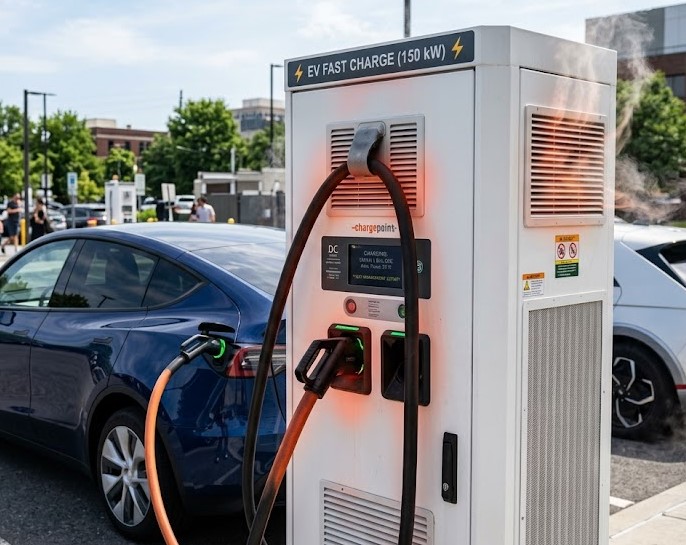
The charging power directly determines the scale of heat generation. Fast chargers (above 120 kW) handle hundreds of amperes during operation, which produces a large amount of heat according to Joule's law. In contrast, a 7 kW home slow charger has a smaller current, and the heat generated is relatively controllable.
Highly efficient charging stations convert more input electrical energy into usable energy for the battery, reducing heat loss. Choosing high-efficiency charging equipment is the primary measure to control heat. Current mainstream chargers have an efficiency of about 90%, and high-quality products can reach more than 95%.
The external ambient temperature directly affects heat dissipation. In high-temperature environments, the temperature difference between the charging station and the surroundings decreases, reducing cooling efficiency and increasing internal temperatures. During hot summer periods, the cooling fans must operate continuously, yet it remains difficult to maintain the temperature within a safe range.
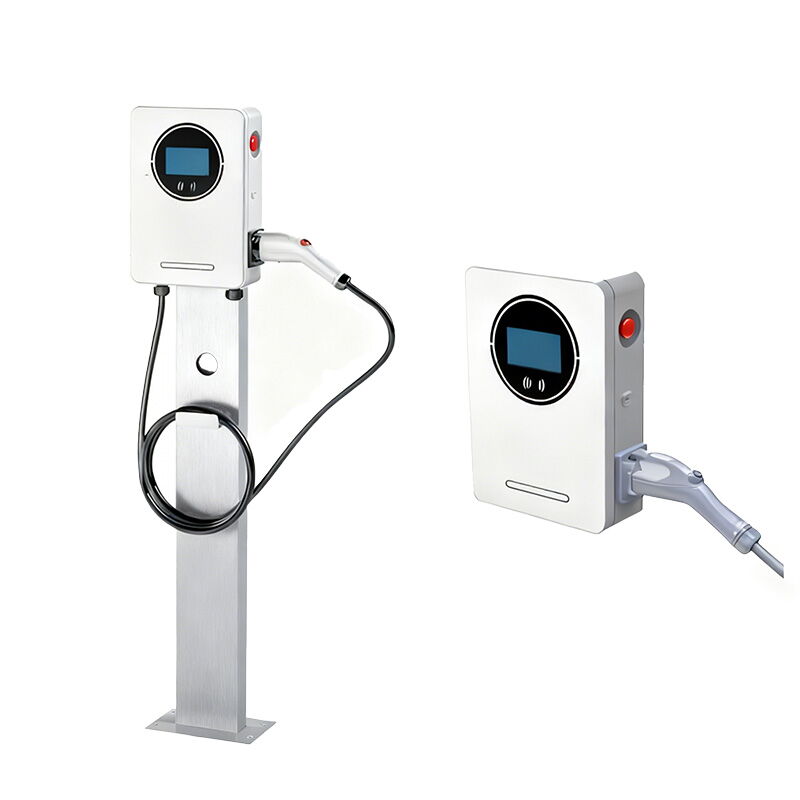
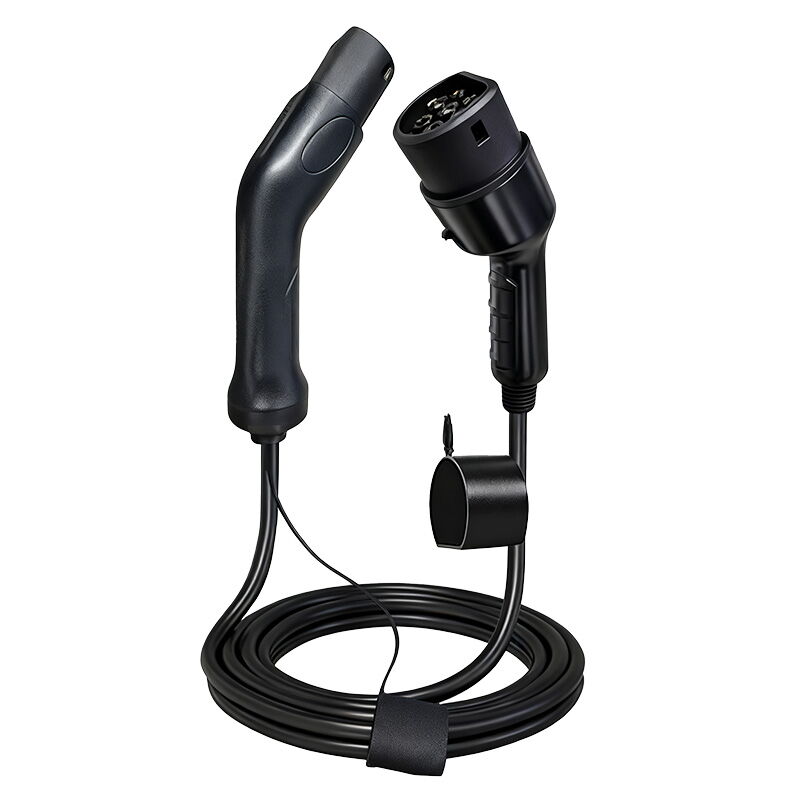
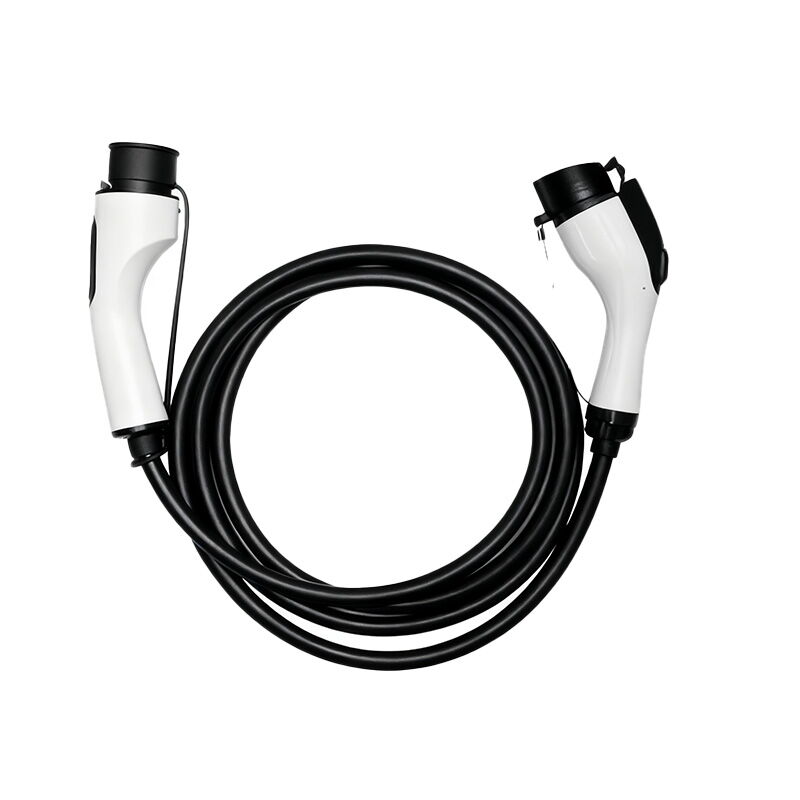
The resistance of the charging cable also generates heat. High-resistance cables lose more energy as heat during transmission, so it is necessary to use low-resistance, high-quality cables. For example, J1772 to 62196-2 16A EV charging cables and Type 2 16A three-phase AC charging cables can effectively reduce heat generation during charging.
Long periods of continuous high-power charging lead to heat accumulation. If a charging station operates at full load for more than four hours, the temperature of internal components continues to rise, which may trigger the overheating protection mechanism.
Because heat generation is an unavoidable byproduct of charging, charging stations must be equipped with effective cooling systems. Currently, the main cooling solutions are divided into passive cooling and active cooling.
Air cooling is the most widely used method, especially suitable for medium- and low-power chargers below 60 kW.
- Working principle: The air-cooling system forces airflow with a fan to carry away heat from the internal components of the charging station. Air is drawn in from the front panel, passes through the heatsink and heating components, and is discharged from the rear of the module, forming continuous heat exchange.
- Advantages: Simple structure, easy installation; Lower cost, convenient maintenance; Mature technology, high reliability.
- Limitations: Cooling efficiency is strongly affected by ambient temperature; each 10°C increase in temperature reduces efficiency by about 15%-20%; May not meet cooling requirements in high-power scenarios, requiring a reduction in charging power; Fan noise is relatively high; Protection rating usually only reaches IP54 or IP55.
In high-temperature environments, air-cooled charging stations may need to reduce power. Actual tests show that a 60 kW charger may drop to 45 kW output in high temperatures to control internal temperature.
With the development of fast-charging technology, liquid cooling has gradually become the mainstream solution for charging stations above 120 kW.
- Working principle: Liquid cooling systems use specially formulated coolant (such as ethylene glycol solution) circulating in sealed pipes, flowing through high-heat components such as charging modules, cables, and connectors. After absorbing heat, it enters the radiator and dissipates heat into the external environment through a heat exchanger.
- Core advantages: Cooling efficiency is 3–5 times that of air cooling, providing stronger heat dissipation in the same volume; Can keep core component temperatures below 50°C, maintaining full power output even in 40°C environments; Fully sealed design, protection rating up to IP65, effectively isolating dust, salt spray, and water vapor; Noise below 55 dB, suitable for urban environments; Charging cables can be thinner and lighter, improving user experience.
- Technical classification: Full liquid cooling covers the entire charging system, all core heat-generating components are cooled via liquid loops, supporting megawatt-level ultra-high power output; Endpoint liquid cooling focuses on the charging gun and cable ends, balancing performance and cost; currently mainstream in the market
Liquid-cooled chargers can handle currents up to 600 A, with charging speeds several times faster than traditional chargers. Currently, the design power of liquid-cooled ultra-fast chargers has reached 900 kW, theoretically capable of fully charging a Tesla Model 3 in five minutes.
- Impact on the charging station: Excessive temperatures can cause charging station components to degrade over time, reducing efficiency, generating more heat, and extending charging time. In extreme cases, overheating may lead to charger malfunction or complete failure. Long-term high-temperature operation accelerates aging of electronic components, reducing mean time between failures (MTBF) by 30%-40%.
- Impact on vehicle batteries: Lithium-ion batteries are highly sensitive to temperature. High heat accelerates internal chemical reactions, leading to faster battery degradation, reduced capacity, and shorter overall lifespan. If battery temperature becomes too high during charging, the vehicle's thermal management system may reduce charging power or even pause charging.
- Safety hazards: Although EV charger fires are relatively rare, when they occur, the damage to infrastructure and disruption of operations can be severe. Overheating may damage key components such as capacitors or IGBT modules and, in extreme cases, may result in smoke or fire.
According to industry experience, charging station overheating is usually caused by the following factors:
- Cooling system failure: Fans blocked by leaves, dust, or debris can cause internal components to overheat. Dust thickness exceeding 2 mm can reduce cooling efficiency by 30%. If fans stop working, internal heat rises rapidly, which is very dangerous.
- Component aging or failure: Damaged components, such as faulty capacitors, may cause functional anomalies, leading to overheating. Over time, aging worsens, increasing the risk.
- Overload operation: Using the charger with vehicles exceeding its safe power capacity may cause overloading. Although modern chargers have power negotiation mechanisms, abnormal situations may still cause overload.
- Improper installation: Poor quality installation or incorrect wiring may create resistance accumulation, which generates heat over time. Loose terminals create contact resistance, leading to localized heating.
- Software or firmware issues: Bugs or vulnerabilities in software or firmware may stress internal mechanisms. For example, firmware faults may cause continuous operation loops, leading to overheating.
- Lack of maintenance: Failure to perform regular maintenance can lead to severe overheating. This includes physical cleaning to remove dust and dirt, as well as visual inspection to identify cracks, loose connections, or damaged cables.
Since charging station overheating carries many risks, effective thermal management and safety measures are essential. Proven best practices include:
- Clean cooling systems: Regularly check for dust or debris blocking vents, and clean dust from heatsinks. Effective cleaning prolongs charger life and reduces power loss, improving efficiency.
- Inspect connectors: Check cables and connectors for damage or looseness, ensuring terminals are tight.
- Test safety functions: Regularly test ground fault interrupters and other safety devices.
- Check fan operation: Ensure cooling fans operate normally without abnormal noise or stoppage.
Install chargers in well-ventilated areas, away from heat sources.
Avoid direct sunlight; use shading structures if necessary.
Ensure sufficient space around the charger for airflow.
In high-temperature environments, charge preferably in early morning or evening.
Modern chargers can monitor component temperatures in real time and adjust charging rates accordingly.
When temperature exceeds a preset threshold (usually 60–70°C), the software automatically reduces charging power or pauses charging to maintain safe operating temperatures.
Some advanced AI systems can detect high temperatures and automatically stop all ongoing charging sessions, preventing new sessions from starting.
- Home slow chargers (7–11 kW): Air cooling is sufficient and cost-effective.
- Commercial fast chargers (60–120 kW): Choose air or liquid cooling depending on usage frequency and environment.
- Superchargers (120 kW+): Liquid cooling is recommended for sustained high-power output and long-term reliability.
For operators with EV fleets, implement tools to detect and prevent overheating, including:
- Installing temperature monitoring sensors
- Configuring remote monitoring systems
- Developing overheating response procedures
Equipping fire-fighting equipment (even though fire risk is low, potential losses are high)
EV charging stations do generate heat, and the amount depends on power level, charging efficiency, charging rate, ambient temperature, and cable resistance. Although heat generation is unavoidable, proper cooling systems, thermal management software, and strategic installation can effectively control temperatures, ensuring safe operation and prolonged equipment life.
For ordinary users, understanding how charging stations generate heat and basic maintenance can help protect equipment and vehicles during daily use. For operators and fleet managers, investing in advanced thermal management systems and regular maintenance is key to ensuring long-term stable operation of charging infrastructure.
With continuous technological advancement, future charging stations will become more efficient, safe, and quiet, providing a robust infrastructure foundation for the widespread adoption of electric vehicles.