Portable EV Charger: Benefits, Drawbacks and Scenarios
With the increasing popularity and widespread adoption of new energy vehicles, the completeness and convenience of charging facilities have become key factors directly influencing the driving and ownership experience of vehicle users. Among the many available charging methods, the portable EV charger has gradually gained attention and recognition due to its flexibility, mobility, and practicality. For many new energy vehicle owners, it has increasingly become a preferred and commonly used charging tool. Relying on its distinctive advantages, it brings great convenience to vehicle users. However, at the same time, it also has certain limitations that cannot be ignored and that must be examined carefully. This article will provide a comprehensive and detailed analysis of various aspects of the portable EV charger to help vehicle owners better understand this highly practical charging device.
As new energy vehicles gradually become mainstream modes of transportation, the ease, flexibility, and accessibility of charging have become extremely important concerns for users. The portable EV charger stands out among many charging options because of its notable advantages. Many vehicle owners even refer to it as a magic charging device due to its usefulness in real-life situations. Below, we take a closer look at its most prominent advantages and the reasons behind its growing popularity.
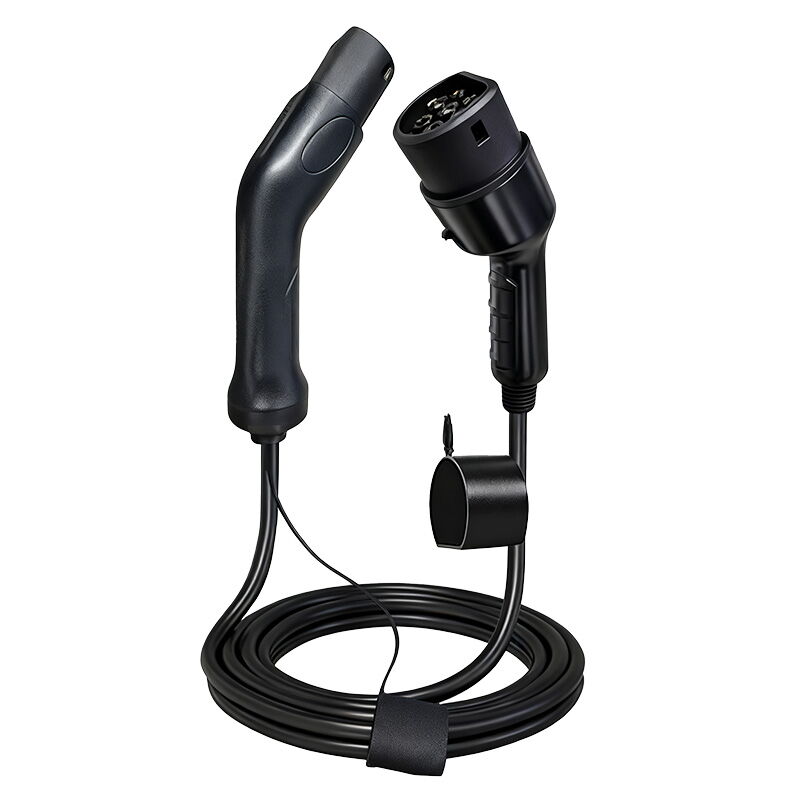
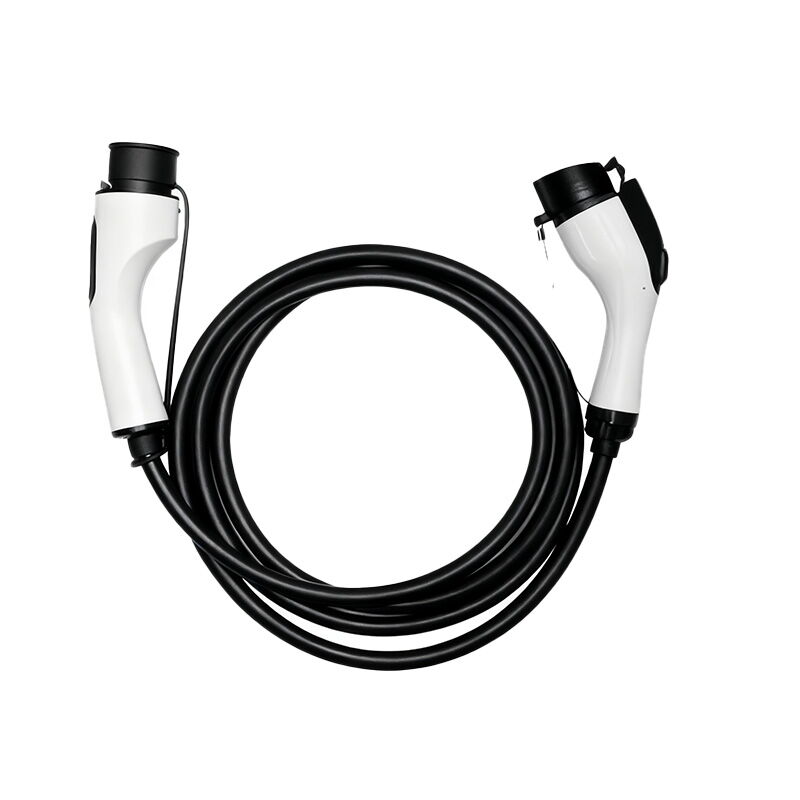
The most significant and widely recognized advantage of a portable EV charger is its portability. The entire device is designed to be compact and lightweight, making it very easy to store inside the vehicle without occupying much space. It can be conveniently placed in the trunk or kept inside the cabin. This design allows drivers to charge their vehicles in a variety of environments and scenarios. Whether at home, in the office, outdoors, in a parking lot, or even when visiting friends or relatives, as long as a standard 220V outlet is available, the vehicle can be charged immediately.
For drivers who frequently travel long distances or live in areas with insufficient or inconvenient access to fixed charging stations, this advantage becomes even more valuable. For instance, while driving long routes, you may unexpectedly find that your battery power is running low and no public charging stations are available nearby. In such a case, the portable EV charger becomes extremely practical. You only need to find a regular 220V power socket, such as at a shop, hotel, or service area, and you can continue charging your vehicle, eliminating the fear of being stranded due to an empty battery. Therefore, the portability of a portable EV charger offers essential reassurance for many drivers, especially in emergency situations.
Compared with installing a fixed home charging station, purchasing a portable EV charger is significantly more economical and cost-effective. Home charging stations usually require not only expensive equipment but also professional installation, wiring modifications, safety inspections, and sometimes additional electrical upgrades. These processes come with extra expenses and may even require users to submit applications to property management or electricity providers. A portable EV charger, on the other hand, completely avoids these complicated procedures and additional costs. A fully functional unit can be purchased for only a few hundred yuan, making it a very budget-friendly option.
For vehicle owners who do not require frequent large-scale charging or those who primarily rely on public charging stations but still want a backup solution for emergencies, a portable EV charger provides excellent value. Its affordability combined with flexibility makes it a practical investment for many new energy vehicle owners.
Well-known and reputable brands of portable EV chargers usually include comprehensive safety protection systems to ensure safe use in a variety of environments. For example, dual temperature control protection can effectively prevent overheating, especially when charging in high-temperature environments during summer. Compliance with GB/T standards ensures proper communication between the charger and the vehicle, preventing charging abnormalities. In addition, IP67-level waterproof protection helps prevent water intrusion, ensuring that internal electronic components remain safe and stable even in humid conditions.
These multiple protection mechanisms are crucial in preventing short circuits, leakage, excessive temperature rise, over-voltage, and other potential risks. For users, these features offer a high level of reassurance, ensuring stable and safe usage during every charging session.
Portable EV chargers generally support multiple current levels, typically including 10A and 16A household outlets. Charging power usually reaches around 3.5kW. This allows users to select the appropriate current based on the environment and specific needs. For example, when charging overnight, a lower current may be sufficient. When faster charging is desired within the constraints of a household outlet, a higher current setting can be selected.
In addition, many portable EV chargers support various current and voltage outputs, making them compatible with different brands and models of electric vehicles. This flexibility greatly enhances their overall usability and adaptability across different usage scenarios.
Although portable EV chargers bring significant convenience, they are not perfect. For certain users, some of their inherent limitations may create inconvenience. Below, we examine these limitations in detail to provide a more balanced perspective.
Portable EV chargers typically offer a charging power of around 3.5kW, which is slower than most standard home charging stations that generally start at 7kW or higher. For users who require fast charging, this speed may not be sufficient.
For example, for a new energy vehicle equipped with a 50kWh battery, using a 3.3kW portable EV charger requires approximately 15 hours to fully charge the battery. In contrast, a 7kW home charging station takes only around 7 to 8 hours. This difference makes portable EV chargers less suitable for users who need frequent or fast charging. Therefore, portable EV chargers are better suited as backup emergency tools rather than primary charging equipment.
Portable EV chargers require a 220V household power outlet for operation. If the outlet is used for extended periods or if its quality is poor, overheating or tripping may occur. When charging outdoors, users must also consider the waterproof and dustproof properties of the outlet itself. If the outlet lacks proper protection, moisture may enter and affect the charger's internal electronic components, posing potential safety hazards.
As a result, users must ensure they choose high-quality outlets and avoid overloaded circuits. These precautions are necessary to prevent overheating, voltage instability, or even fire risks.
Although portable EV chargers can assure basic charging functions, they usually lack intelligent features such as app-based control, remote monitoring, charging statistics, or scheduling. Users cannot check charging progress, energy usage, or battery status through a smartphone. Compared with smart home chargers, this reduces overall convenience. However, for users who rely primarily on basic functionality, this limitation may not be of major concern.
With the large number of models and brands available on the market, choosing the right portable EV charger can be overwhelming. Selecting a high-quality device is essential for ensuring safety, efficiency, and long-term reliability. The following points should be considered when choosing a suitable portable EV charger.
Brand reliability and product safety are the most important criteria when selecting a portable EV charger. Well-known manufacturers such as Tesla, XPENG, INVT, and Star Charge offer products with strong safety guarantees. These chargers typically include protection against over-voltage, short circuits, leakage, temperature rise, lightning, and overload.
Some third-party brands also provide reliable options. For example, the portable EV charger manufactured by Xiaochong Hairun follows GB/T standards and supports operation with standard household outlets without requiring a ground wire. It includes eight major safety protections, including:
- Short-circuit protection
- Leakage protection
- Lightning protection
- Over-voltage protection
- Overload protection
- Grounding protection
- Dual temperature rise protection
- Hot-plug protection
Such comprehensive protection helps ensure safe use in various environments.
Portable EV chargers generally range in power from 2.2kW to 7kW. Higher power means faster charging, but the choice should be based on actual needs and the outlet's load capacity. Occasional emergency charging requires only low power, while frequent supplemental charging benefits from higher power. Before purchasing, users must ensure that their household circuit can safely support the charger's power level.
Due to variations among different electric vehicle brands, including charging communication protocols and charging port specifications, compatibility is an important factor. Many portable EV chargers support multiple voltage and current settings, but users must confirm the specific compatibility details for their vehicle before making a purchase.
Even after selecting the right portable EV charger, proper operation and safety awareness remain crucial to prevent accidents and ensure a stable charging experience.
Before plugging in the charger, check whether the outlet meets the required voltage and current specifications. Avoid connecting multiple high-power appliances to the same outlet during charging. Overloading household circuits may cause tripping or overheating, creating potential hazards.
Portable EV chargers, although designed with waterproof protection, should still be kept away from excessive moisture. Water exposure may damage internal components. If charging in humid outdoor conditions is unavoidable, users should take appropriate waterproofing measures, such as using a waterproof protective cover.
Long extension cords may cause voltage drops or heating problems. Poor-quality cables may lead to unstable current, affecting charging efficiency or damaging the charger or vehicle battery. Therefore, extension cords should be avoided. If they must be used, they should be short, thick, and high-quality.
As a small, lightweight, economical, and practical charging tool, the portable EV charger provides significant convenience and security for new energy vehicle users. While it cannot replace home charging stations or public fast chargers due to its slower charging speed and limited smart functions, it still plays an irreplaceable role in emergency situations, travel scenarios, and environments lacking fixed charging facilities. Vehicle owners should choose portable EV chargers based on their specific needs, focusing on reputable brands, safety protection features, power levels, and compatibility. Additionally, attention to proper operating procedures ensures safety and extends the lifespan of both the charger and the vehicle battery.