When to Use DC Fast Charging for Electric Vehicles
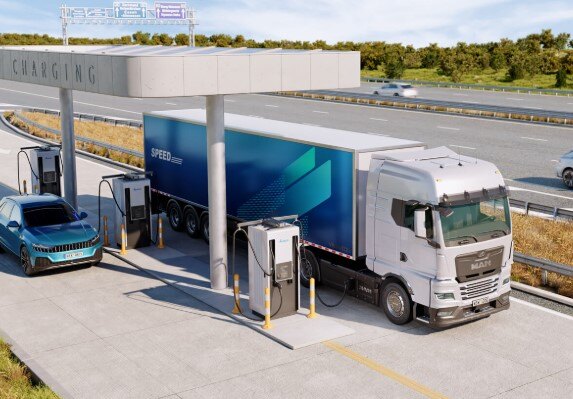
You bought an electric vehicle, but quickly realized that ev charging is much more complicated than refueling a gasoline car—this is a real feeling shared by many new EV owners. Faced with terms like Level 1, Level 2, and DC fast charging, along with concerns such as "Will it damage the battery?", "It charges too slowly", and "I can't find a charging station", many people even develop anxiety about long-distance travel.
In fact, as long as you master the correct methods, EV charging can be both fast and worry-free. This article focuses on the most important topic of DC fast ev charging: what exactly it is, how it differs from regular charging, when it must be used, how to operate it correctly, and how to ensure efficiency while protecting the battery.
Whether you are a new EV owner or someone considering switching to an electric vehicle, this guide will help you clarify your understanding and make electric mobility truly easy.
DC fast charging (DC Fast Charging) is currently the fastest EV charging method. To understand why it is fast, we must first understand the essential difference between AC charging and DC fast charging.
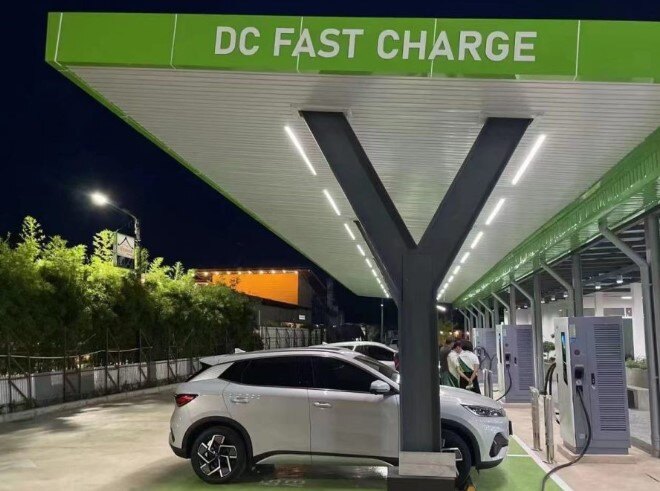
Electricity used in daily life is divided into two types: alternating current (AC) and direct current (DC).
AC current constantly changes direction. Household electricity and ordinary charging stations both use AC power. DC current flows in a constant direction. Batteries in phones and EVs store DC power.
EV batteries can only store DC power. This creates a problem: if AC power is used to charge an EV, it must first be converted into DC.
Level 1 and Level 2 AC charging, commonly used at home or shopping malls, works as follows:
AC power enters the vehicle through the charging station, and the onboard charger converts AC into DC before storing it in the battery. However, the onboard charger has limited capacity, usually up to about 19 kW.
DC fast charging works differently: The charging station converts AC to DC internally, and the converted DC is directly sent into the battery, eliminating the "intermediate step" of the onboard charger. Therefore, the power can reach 50 kW to 350 kW or even higher.
Simply put: AC charging is like using a laptop that must go through a power adapter; DC fast charging is like directly charging a phone battery without that bottleneck, so it is much faster.
According to data from the U.S. Department of Transportation, DC fast charging can charge an EV to 80% within 20 minutes to 1 hour. Level 2 AC charging usually takes 4 to 8 hours for a full charge. Level 1 home charging using a standard outlet may take 12 to 24 hours.
The difference is very significant. If you are traveling long distances, DC fast charging can greatly reduce waiting time.
Although DC fast charging is fast, it is not suitable for all situations. Understanding the use cases allows you to save both time and protect the battery.
Long-distance travel: This is the main use case for DC fast charging. Suppose your EV has a range of about 430 km (270 miles). When driving at highway speeds, actual range is lower than the rated value, and you may need to recharge or take a break every 3–4 hours. At highway service areas, DC fast charging can restore most of the range in 20–40 minutes, which perfectly matches a rest or meal break. Without DC fast charging, long-distance travel would become very inconvenient, possibly requiring hours of charging stops.
Low battery and urgent need: For example, you suddenly need to leave and find the battery below 20%; or you forgot to charge overnight and need the car in the morning; or you need a quick top-up during a workday. In all these cases, DC fast charging can quickly solve urgent needs.
Operational vehicles: This includes logistics vehicles that need to minimize downtime; taxis and ride-hailing vehicles that require continuous operation; and shared mobility fleets that require frequent use. These vehicles usually rely on DC fast charging between operations to quickly recharge and maintain availability.
Daily commuting nighttime charging: If you only drive a few dozen kilometers per day and have enough time at night, there is no need for DC fast charging. Level 2 or home charging is more economical and better for the battery.
When battery is above 80%: After 80%, DC fast charging speed drops significantly and may not be much faster than Level 2 charging. It becomes inefficient and may increase battery stress.
When there is sufficient time and no urgency: For example, at home on weekends when the car can stay parked for hours, slow charging saves money and benefits battery health.
DC fast charging is not complicated, but first-time users may feel unfamiliar. Below is the standard process.
Confirm whether the vehicle supports DC fast charging:
Not all EVs support DC fast charging. Before purchasing or using, confirm whether the vehicle has a DC fast charging port, its maximum charging power, and the charging standard used.
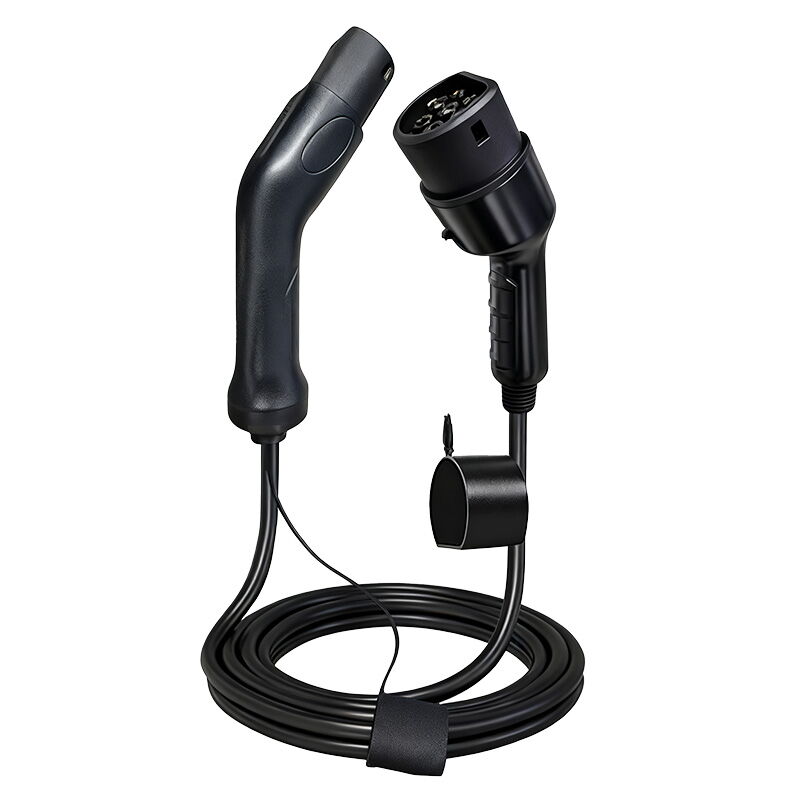
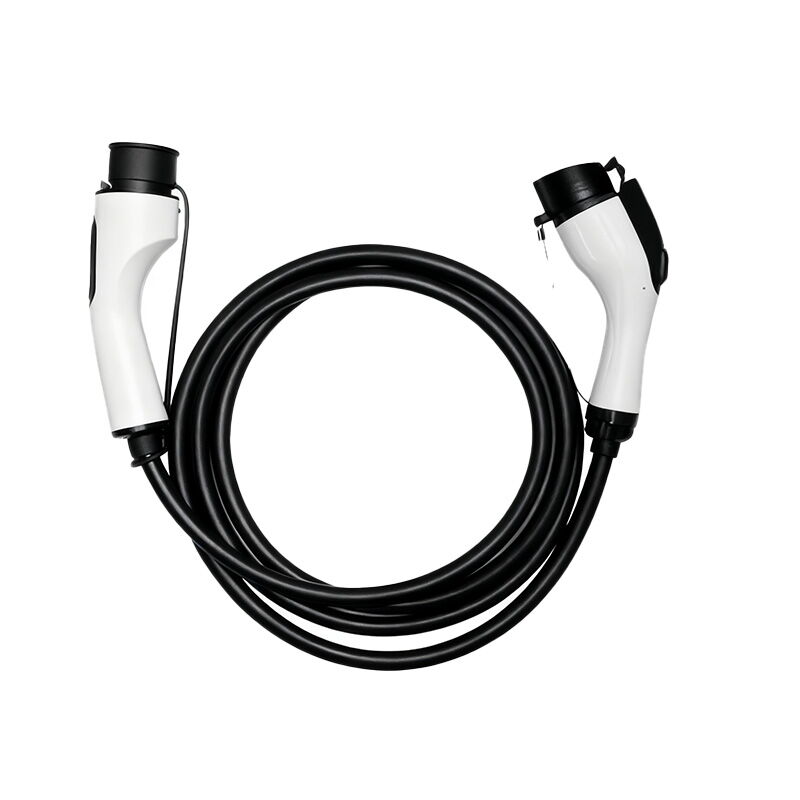
Understand charging connector standards: Different regions and brands use different standards. CCS (Combined Charging System) is the mainstream in North America and Europe (CCS1 in North America, CCS2 in Europe). CHAdeMO is the Japanese standard and is also used in some Asian and Western models. Tesla uses its own proprietary connector, with adapters required for some stations. GB/T is the national standard in China.
Locate charging stations in advance: Use mobile apps or websites to find nearby DC fast charging stations. Check whether chargers are available or occupied, whether they are operational, charging power levels, pricing (per kWh or per minute), and user reviews regarding reliability.
Park and prepare the vehicle: Park properly in the charging space. Turn off the vehicle if required. Open the charging port and ensure there is no debris or moisture.
Select and connect the charging cable: Choose the correct charging connector based on the vehicle. Pick up the cable and ensure it is not damaged or tangled. Align and insert it into the charging port until you hear a locking sound. Some cables are heavy, so apply steady force.
Start charging: The charger screen will provide instructions. Authorization methods usually include: mobile app QR scan, RFID card swipe, or credit card payment (some stations support this). Follow prompts to start charging and confirm power and charging status.
Monitor charging process: You can view real-time data on the charger screen or via mobile app. Monitor charging power, battery percentage, and any abnormal alerts such as overheating or connection issues.
End charging: When reaching the target (usually around 80%) or when leaving early, stop charging via the screen or app. Wait for the connector to unlock (may take a few seconds), remove it gently, return it to the station, and close the charging port.
Do not forcefully unplug the connector: During charging or immediately after stopping, the connector may be locked. Forcing it may damage the equipment or vehicle port.
Pay attention to environment: In extreme weather (heavy rain, snow, extreme heat), some chargers may be temporarily unavailable. Follow safety instructions.
Keep payment receipts: It is recommended to keep transaction records for troubleshooting billing issues.
Mastering the following tips can make charging more efficient and safer.
This is the most important principle.
Why is 20%–80% the optimal range? Charging is not linear; it follows a charging curve:
- 0%–20%: startup phase, relatively slower as the battery management system checks conditions.
- 20%–80%: full-speed phase, highest charging power and fastest speed.
- 80%–100%: slowdown phase, power decreases significantly to protect the battery.
Practical impact: Charging from 20% to 80% may take 30 minutes, while 80% to 100% may take another 30 minutes or more. The last 20% is time-inefficient.
Recommendation: Start charging around 20% and stop around 80% unless necessary. This saves time, reduces battery stress, and improves charger availability.
Before departure, use navigation apps or dedicated tools to plan routes and mark DC fast charging stations along the way. Check real-time availability and estimate energy consumption per segment.
During driving, monitor remaining range and do not wait until the battery is too low (below 10%) before searching for chargers.
Backup plan: Always have alternative charging stations near main stops in case of malfunction or congestion.
Impact of DC fast charging: High-power charging generates more heat. Frequent long-term use may accelerate battery degradation. Occasional use has minimal impact.
Recommended ratio:
- Daily charging: Level 2 or home charging (80%–90%)
- DC fast charging: supplementary use (10%–20%)
During long trips, continuous use is fine, but daily dependence is not recommended.
Temperature management: In extreme cold or heat, battery stress is higher, and frequent fast charging may have additional negative effects. When possible, charge in moderate temperatures.
Key functions include: real-time charger availability, remote start/stop, charging history, completion notifications, and navigation to stations.
Usage tips: Check availability before departure; monitor remotely instead of staying in the vehicle; set notifications to avoid idle-time fees at some stations.
DC fast charging is usually more expensive than AC charging due to:
High equipment cost, complex technology, installation and maintenance expenses, and grid capacity requirements.
Billing methods: Per kWh charging, per-minute charging, or hybrid pricing models.
Cost-saving tips: Use Level 2 charging when not urgent; consider membership plans for frequent users; avoid charging to 100% unnecessarily.
DC fast charging and AC charging are not opposites—they are complementary systems.
Level 2 AC charging: Used for daily commuting, home charging, and workplaces. Charging time is 4–8 hours. Low cost, widely available, gentle on battery, and convenient for regular use.
DC fast charging: Used for long trips, emergencies, and high-utilization vehicles. Charging time is 20–60 minutes to 80%. Higher cost, requires planning, and may involve queues.
Home scenario: charge overnight using Level 2 charging and off-peak electricity.
Work scenario: use workplace charging facilities during working hours.
Shopping scenario: use Level 2 chargers while parked.
Long-distance scenario: plan DC fast charging stops and use charging time for rest or meals.
Urban commuters: rarely use DC fast charging; Level 2 is sufficient.
Intercity travelers: use both regularly and rely on mapped charging routes.
Users without fixed parking: depend on public charging networks and choose based on time availability.
Can all EVs use DC fast charging?
- No. Some entry-level or older models only support AC charging. Always check specifications before purchase.
Does DC fast charging damage the battery?
- Occasional use does not. Frequent use may accelerate degradation. Following the 20%–80% rule minimizes impact.
Why does charging slow after 80%?
- This is a battery protection mechanism. Charging power is reduced to prevent damage.
Can DC fast charging be used in rain?
- Yes. Charging systems are waterproof. However, avoid extreme flooding conditions.
Can I stay in the car while charging?
- Yes, but ventilation is recommended. Some vehicle systems remain active during charging.
Why is actual charging speed lower than rated power?
- Because charging speed depends on three factors: charger capacity, vehicle limit, and battery condition (state of charge and temperature). The lowest factor determines actual speed.
Can hybrid vehicles use DC fast charging?
- Most hybrid (HEV) and plug-in hybrid (PHEV) vehicles do not support DC fast charging or only support low-power charging. Only full EVs (BEV) or some high-end PHEVs support it.
DC fast charging is a key infrastructure component of the EV era. It solves the major limitation of electric vehicles—long charging time—but its value lies in on-demand usage rather than daily dependence.
Remember three core principles:
Timing principle: Use it for long trips, emergencies, and operational needs; not for daily commuting when time is sufficient.
Range principle: Try to stay within the 20%–80% battery range for maximum efficiency and battery friendliness.
Complementary principle: Use DC fast charging together with AC charging—fast charging for speed, AC charging for cost and convenience.
By mastering these principles, you can fully leverage the advantages of DC fast charging while protecting the "heart" of your EV—the battery—making electric driving truly convenient and reliable.